
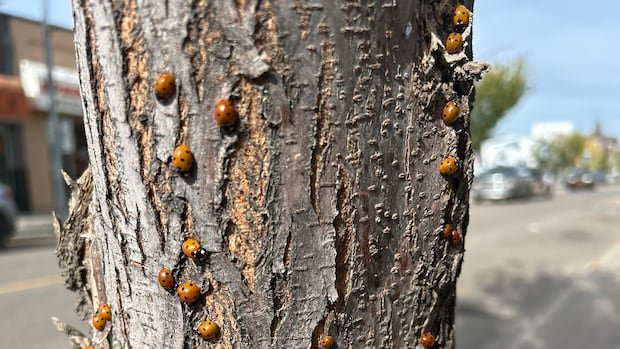

Ladybugs are abundant in Saskatchewan this month as they prepare for hibernation, experts say. Georgiana Antochi-Crihan, the entomologist for the City of Saskatoon, explained that ladybugs experience cycles of population growth and decline, with the current period being a boom for these insects due to ample food availability.
These beneficial bugs primarily feed on aphids, scale insects, mealybugs, and other pests. While some areas like Regina have not seen a significant increase in ladybugs, the city did experience a high aphid population this year, which supports the survival of ladybugs, according to Ashley Thompson, the manager of parks technical services for the City of Regina.
Vesna Fa from North Battleford noted a similar abundance of aphids in her area, attracting ladybugs to her garden. Fa, the executive director of Midwest Food Resources, emphasized the importance of preserving ladybugs as they are beneficial insects.
Candace Savage, chair of Wild About Saskatoon, highlighted the importance of celebrating the province’s diverse ladybug population for their environmental contributions. Saskatchewan is home to around 75 species of ladybugs, including both native and introduced varieties. The seven-spotted lady beetle, a common species identifiable by its seven spots, is among the introduced ladybugs in the province.
As ladybugs prepare for winter hibernation, they are gathering in warm locations, such as the sides of buildings. Antochi-Crihan explained that ladybugs have mechanisms to survive the cold prairie temperatures, producing antifreeze compounds to endure winter. The ladybug population is expected to increase in the spring when they emerge from hibernation.
Overall, ladybugs play a crucial role in maintaining ecosystem balance, and efforts to support their habitat and diversity are essential for environmental conservation.