
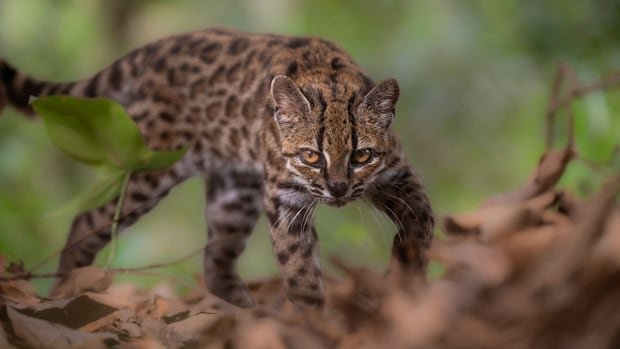

A small wild cat found in Bolivia’s cloud forest has been recognized as a newly discovered species, marking the first formal naming of a new living cat species in over a century. Known locally as Tilcayo, this cat is part of a group of tiger cats common in South America. Discovered in Bolivia’s Yungas forest, the cat is smaller than an average domestic cat, measuring about 46 centimeters (18 inches) in length and weighing around three pounds.
Genetic analysis confirmed the cat as a new species, named Leopardus tilcayo while retaining its local title. The cat’s fur is light brown with rosettes spread irregularly across its body, as described by Paola Nogales Ascarrunz, a National Geographic explorer involved in the study. Scat samples suggested a diet of small rodents, with camera-trap evidence hinting at nocturnal activity.
Tiger cats are considered cryptic species that are hard to distinguish based on appearance alone, according to evolutionary biologist Jonas Lescroart. Previous thought treated tiger cats as a single species, but genetic studies hinted at multiple species. The newly identified cat species, Tilcayo, is currently represented by only two live individuals examined, one of which resides in a wildlife sanctuary.
DNA analysis revealed five genetically distinct tiger cat species, with the Tilcayo lineage diverging about 1.4 million years ago. A new subspecies of tiger cat was also identified in Peru’s Yungas, named Leopardus tigrinus antisuyo after the region it occupies. The International Union for Conservation of Nature may list the new species as endangered separately from the other tiger cat lineages, considering their declining populations.
The Yungas ecosystem faces threats from deforestation, agriculture expansion, fires, and mining, emphasizing the need for conservation efforts. The discovery of new species like Tilcayo highlights the importance of protecting biodiversity and raising awareness about undiscovered and endangered species worldwide.