
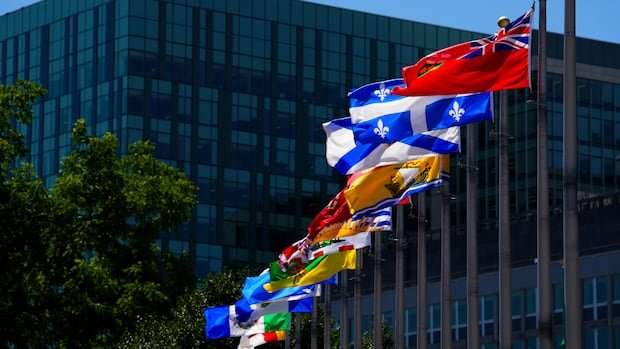

The breakdown of negotiations with the United States has heightened the need to diminish trade obstacles within Canada. However, experts caution that resolving these issues is a complex endeavor.
Recent efforts to enhance interprovincial trade have gained momentum. Last month, nine provinces reached an agreement to permit direct-to-consumer alcohol sales across provincial borders. Yet, even this advancement in the alcohol sector underscores the complexities of liberalizing sales. Some provinces have imposed additional fees and regulations beyond what producers encounter in their home province.
Jeff Guignard, the CEO of Wine Growers British Columbia, criticized the inefficiency of having to pay double wholesale markups. He highlighted the absurdity of requiring B.C. wineries to register in other provinces simply to ship wine there, contradicting the objective of fostering trade within Canada.
The potential benefits of streamlining domestic trade are significant. The International Monetary Fund estimates that eliminating internal trade barriers could potentially elevate Canada’s real GDP by up to seven percent, equivalent to about $210 billion in the long run.
CIBC presented a more conservative estimate in March, suggesting a potential one percent GDP boost. Nonetheless, the bank emphasized the value of pursuing this goal as a worthwhile endeavor.
Federal and provincial ministers convened in Iqaluit this week to advance the vision of a unified Canadian economy and address impediments to trade. Key priorities included reaching an agreement on facilitating the flow of services across the country, standardizing the approval process for prefabricated homes and new building materials, and simplifying food trade within Canada.
Corinne Pohlmann, the executive vice-president of advocacy at the Canadian Federation of Independent Businesses, welcomed the renewed focus on dismantling provincial barriers. She noted positive steps, such as provinces agreeing to recognize each other’s standards for goods, implemented in June. However, ensuring the practical effectiveness of these measures remains a challenge.
University of Ottawa professor Wolfgang Alschner is utilizing artificial intelligence to catalog regulations across Canada and identify unnecessary discrepancies. Alschner’s goal is to shed light on hidden trade barriers and advocate for a harmonized set of rules across the country to stimulate more trade opportunities.
In essence, the aim is not only to reduce bureaucratic hurdles on paper but also to facilitate tangible trade expansion in real-world scenarios.