
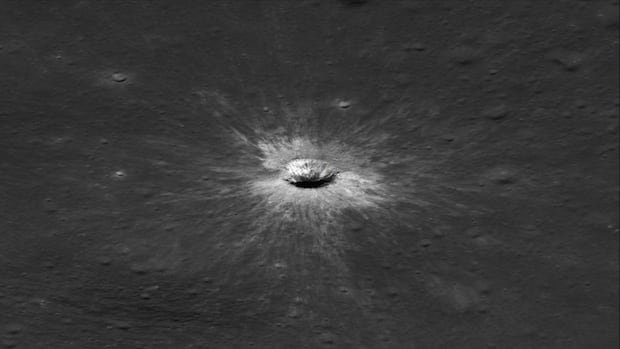

Researchers have identified a crater on the moon larger than the Roman Colosseum, formed by a powerful impact two years ago that went unnoticed initially. The crater, measuring 222 meters wide and up to 43 meters deep, is the largest known recent impact site in the solar system. Such events are rare, occurring approximately once every 132 years, providing valuable insights as NASA plans a lunar base.
The discovery, detailed in two studies published in Science Advances, was made by NASA’s Lunar Reconnaissance Orbiter (LRO) in May 2024, following an asteroid or comet fragment strike. The impact was not detected in real-time by Earth-based or space telescopes. The crater, named after Thomas McGetchin, is a significant addition to the moon’s vast collection of impact scars.
The latest impact altered over 100 kilometers of the lunar surface, ejecting dust and rocky debris at unexpected angles. Mark Robinson, the lead author of one study and chief scientist for LRO’s cameras at Intuitive Machines, noted the unique characteristics of the impact. Another study identified a cold spot surrounding the crater, indicating a disruption of the moon’s topsoil similar to gardening processes.
LRO’s continuous observations reveal that the moon’s top layer is overturned by ejected material every 80,000 years, faster than previously believed. Robinson dispelled the notion that the Apollo moonwalkers’ footprints will endure forever, stating they will erode within that timeframe. The next focus is assessing the risk of ejected material hitting NASA’s moon base, crucial for designing resilient structures to minimize potential damage.