
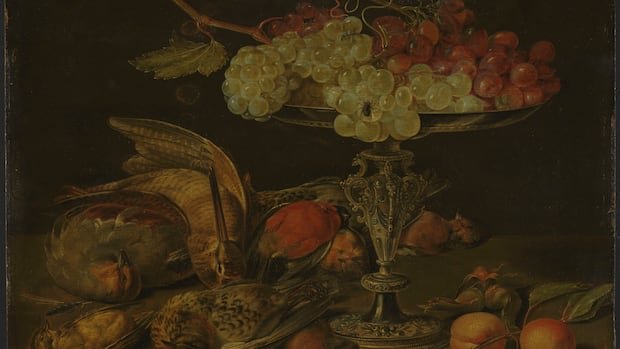

An undiscovered painting by Clara Peeters was found in a museum’s storage, catching the attention of art historian Cynthia Osiecki. Osiecki suspected the unattributed still-life painting could be linked to the 17th-century Flemish Baroque artist Peeters, whom she had been researching.
The piece, named “Still Life with Small Game and Grapes on a Gilded Tazza,” was initially thought to be created by Ambrosius Brueghel before being labeled as “anonymous” and stored away. However, after years of meticulous investigation, Osiecki officially attributed the painting to Peeters due to subtle clues within the artwork.
Peeters, known for embedding her likeness in her paintings, cleverly inserted self-portraits in everyday objects like pewter jugs. The Oslo painting, showcasing nine dead birds, hazelnuts, and apricots, displayed characteristic elements of Peeters’ style, such as the inclusion of a “tazza” and unique bird positioning.
Despite challenges like woodworm damage masking Peeters’ signature, Osiecki and her team compared the artwork with other Peeters’ pieces, ultimately confirming her authorship. The painting will now be featured prominently at the National Museum of Norway’s upcoming exhibition, “Woman Painter,” focusing on historic female artists.
Osiecki emphasized the importance of recognizing overlooked female artists like Peeters, highlighting the ongoing efforts to uncover and attribute artworks to women who have been marginalized or misattributed in art history. This discovery underscores the significance of dedicated research in bringing visibility to female artists’ contributions.