
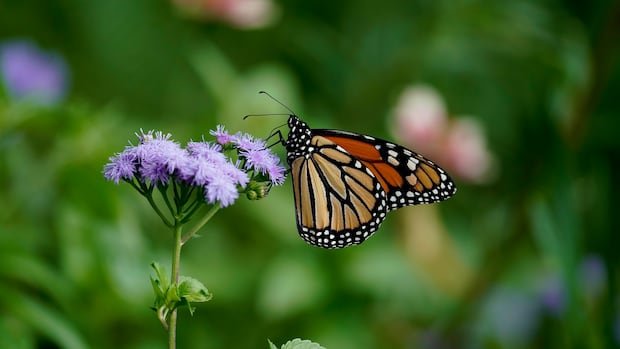

MaryAnn Lepp experienced a remarkable increase in monarch butterflies undergoing their transformation in her garden, with 20 caterpillars feeding on her swamp milkweed in just one day. This surge in butterfly activity is being observed by numerous Canadian monarch enthusiasts, who are noticing a rise in backyard milkweed patches due to the wet and hot weather conditions on the Prairie this summer.
The uptick in monarch sightings is being celebrated by butterfly enthusiasts like Lepp, who eagerly search for monarch cocoons in their gardens. While the exact cause of this increase is not definitively attributed to the weather, experts acknowledge the positive impact of the surge on the federally endangered monarch species.
Marika Olynyk, curator of the Living Prairie Museum, remarked on the abundance of monarchs in Winnipeg this year, emphasizing the continuous presence of caterpillars, chrysalises, and butterflies throughout the summer. The native plants at the tall grass prairie preserve in Winnipeg, including various milkweed species, attract pollinators like monarch butterflies.
Despite efforts by individuals like Lepp to plant milkweed and native wildflowers, these habitats are not as widespread as in the past due to the conversion of grasslands into farmland. Habitat loss remains a significant threat to monarch populations, highlighting the urgent need for conservation efforts.
Monarchs, known for their annual migration between Canada and Mexico, were officially classified as endangered in 2016. The conservation status upgrade came after years of advocacy to provide better protection for the species. Ongoing initiatives, such as monitoring the forest wintering grounds in Mexico, are crucial for assessing the monarch population and ensuring their survival.
In addition to monarchs, other butterfly species, like the Poweshiek skipperling, are facing critical endangerment. Efforts to breed and release these endangered butterflies are showing promising results, offering hope for their recovery. The positive impact of favorable weather conditions on butterfly populations underscores the importance of conservation efforts to protect these delicate species.
As monarch butterflies prepare for their migration south to Mexico, conservationists are gearing up to track their journey using radio transmitters. Enthusiasts like Lepp are dedicated to safeguarding caterpillars and chrysalises, emphasizing the collective responsibility to preserve biodiversity and foster harmony with nature.
Overall, the surge in monarch butterfly activity is a testament to the resilience of these iconic insects and the collective efforts to protect their habitats and ensure their survival.