

Canadian Space Agency (CSA) astronaut Joshua Kutyrk is scheduled to launch from Cape Canaveral, Florida, on October 1, taking along innovative Canadian technology. Living and working in space poses challenges due to the human body’s adaptation to low gravity, leading to various health issues, including the risk of blood clots.
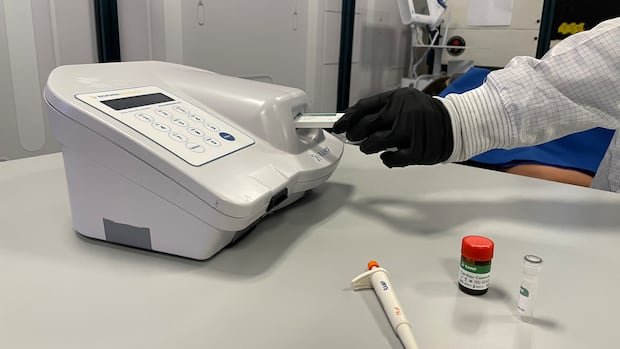
To address these concerns, NASA is collaborating with Response Biomedical, a Vancouver-based company, to deploy cutting-edge technology on the International Space Station (ISS). The technology, known as Acute Care Testing in Space (ACTIS), can quickly detect D-dimer in blood, a protein fragment indicating the presence of blood clots.
This device, derived from Response Biomedical’s RAMP technology, is not limited to detecting blood clots but can also identify heart attacks, COVID-19, RSV, and more. The efficiency of the ACTIS device lies in its ability to provide results within minutes, making it a valuable tool for astronauts and healthcare professionals alike.
The compact and rapid testing capability of the ACTIS device is not only beneficial for space missions but also for use in remote communities on Earth where immediate and accurate medical assessments are crucial. Taso Tsonis, CEO of Response Biomedical, emphasized the importance of portable and fast testing, which can significantly impact patient care.
The successful integration of Canadian technology like ACTIS into space missions signifies a significant milestone for Canada’s contribution to advancements in health and life sciences research. With the potential for future deployment on missions to the moon or even Mars, this showcases the versatility and value of Canadian innovation on a global scale.