
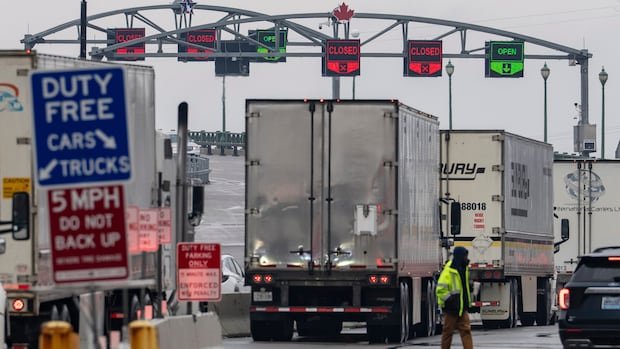

Enforcement of cross-border cargo regulations has significantly increased during the Trump administration, causing delays and financial burdens that are discouraging trade, according to industry experts. The imposition of tariffs along the U.S.-Canada border has led to heightened scrutiny and penalties in customs procedures.
Breanna Leininger, in charge of U.S. operations at Pacific Customs Brokers in Vancouver, described the significant changes in customs requirements. The documentation demanded by border officials for shipped goods has multiplied tenfold compared to previous years. The frequency of customs inspections has also risen sharply, with Leininger handling thousands of customers crossing the border.
Importers are now being asked for more extensive paperwork to demonstrate compliance with product classifications and trade agreements. The proof required and the items subject to tariffs appear to be constantly evolving. U.S. Customs and Border Protection data show a 26% increase in audits this year compared to 2024.
In the first half of this year, U.S. customs authorities collected $70.6 million in trade penalties, marking a substantial increase from previous years. The strict enforcement measures coincide with a trade conflict between Canada and the U.S., resulting in additional costs and delays for businesses involved in cross-border commerce.
Alan Dewar, the executive vice-president of customs brokerage GHY in Winnipeg, highlighted the considerable financial impact of these enforcement changes on businesses. The increased scrutiny at the border has led to additional expenses and logistical challenges, discouraging some from engaging in cross-border trade due to the complexity and costs involved.
Despite the challenges posed by the evolving trade landscape, some businesses have managed to adapt to the new regulations. However, many find the process overwhelming and may opt out due to the difficulties encountered. U.S. Customs and Border Protection stated that their enforcement strategies are based on risk assessment, trade patterns, and legal requirements, urging importers to provide accurate information to facilitate customs procedures.