
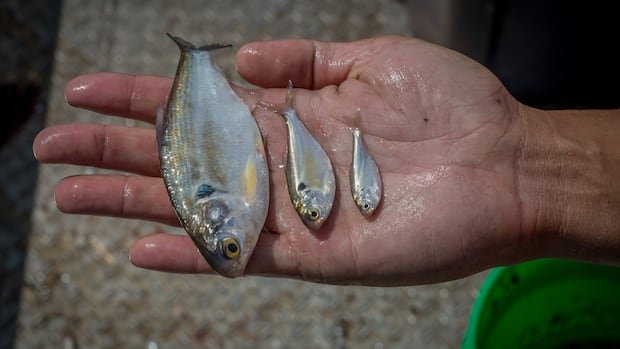

Newly obtained documents shed light on a rare fish incident that disrupted reactor safety at Canada’s largest nuclear power plant almost two years ago. In February 2025, millions of gizzard shad infiltrated the cooling systems at Bruce Nuclear Generating Station near Tiverton, Ont., leading to the shutdown of one reactor and decreased power output at another. The incident left dead fish scattered along Lake Huron’s shores for several days.
The disclosure of over 1,200 federal and provincial records revealed how this environmental anomaly, involving a small, cold-sensitive fish, posed unforeseen challenges to the plant’s operations. Despite the significant impact, Bruce Power, the plant operator, chose not to participate in a broadcast interview but provided a written statement without addressing specific queries from CBC News.
According to Bruce Power’s internal investigation, the plant faced “a novel environmental event,” as described by Canada’s nuclear regulator, caused by an unexpected influx of gizzard shad overwhelming the plant’s fish deterrent systems. Another inquiry in June 2025 concluded that the two fish surges in early February “challenged reactor safety.”
Experts like David Novog, a nuclear safety specialist at McMaster University, emphasized the critical nature of maintaining multiple defense layers at nuclear facilities. While the incident disrupted plant operations, former Bruce Power scientist Douglas Boreham clarified that there was no immediate threat to reactor safety since the reactors responded appropriately to the cooling system disruption.
The Canadian Nuclear Safety Commission (CNSC) highlighted the potential severity of the event in an April 2026 report, cautioning that such incidents could lead to the shutdown of all four units at Bruce A. An official report estimated that around 8.1 million gizzard shad congregated near the plant in a single day, a significant environmental challenge exacerbated by unusually cold winter conditions.
The aftermath of the fish event prompted Bruce Power to invest nearly $10 million in mitigation efforts and research to prevent similar disruptions in the future. Enhanced measures include physical barriers, underwater deterrents, monitoring systems, and artificial intelligence to detect and deter large fish populations from entering the cooling water intakes.
As climate change poses increasing risks to nuclear plant operations globally, experts stress the importance of implementing effective prevention and mitigation strategies to ensure uninterrupted low-carbon electricity production. The incident at Bruce Power underscores the growing need for proactive measures to safeguard nuclear facilities against ecological disruptions.