
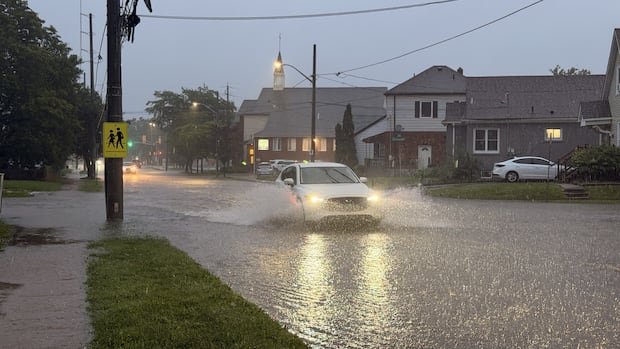

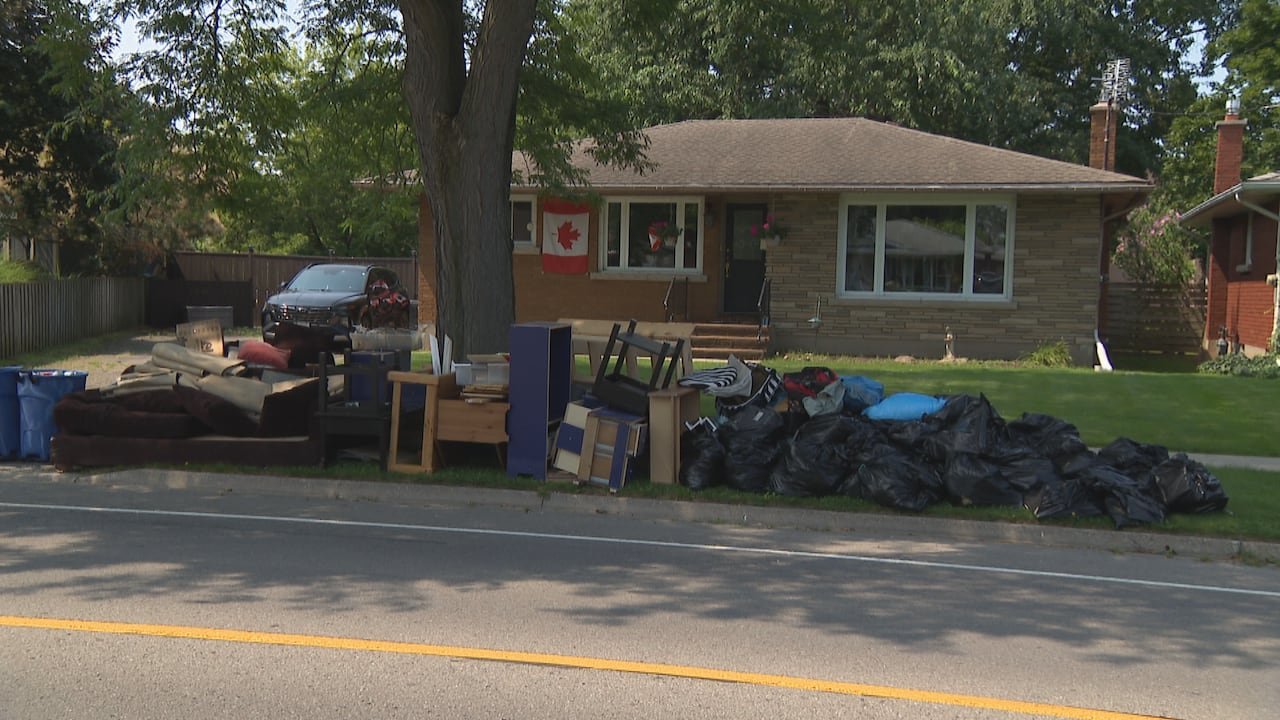
In St. Catharines, Ontario, remnants of recent flooding are evident along the streets, with discarded items like couches, mattresses, and drywall piled up outside homes. The city endured a series of major storms within a short timeframe, causing significant damage as Mayor Mat Siscoe confirmed. These consecutive storms, occurring over 11 or 12 days, marked the most severe weather events the city has ever faced in quick succession.
According to Siscoe, the initial storm was managed by the stormwater system, but subsequent storms overwhelmed the saturated ground, leading to extensive overland flooding and sewer backups into homes. The mayor highlighted instances where sewage infiltrated residential properties during the disaster.
‘They’re back under water again’
Outside St. David’s, Dave White of White Orchard Farms dealt with his fields being submerged during the recent storms. Fortunately, he had harvested his garlic crop a week before the floods, learning from past experiences to safeguard his produce. White’s proactive measures included ensuring proper drainage in his fields to prevent water accumulation, reflecting on the challenges faced in recent years.
White, who also operates a restoration company, expressed the overwhelming demand for services following the flooding, with some properties experiencing recurring inundation despite previous cleanup efforts.
Concerning the future, White emphasized the urgency of upgrading drainage sewage infrastructure to mitigate worsening flood risks, attributing part of the strain to urban development impacting existing systems.
System built 150 years ago
Siscoe clarified that while no specific infrastructure failures caused the recent floods in St. Catharines, the antiquated system struggled to cope with the unprecedented volume of water. The city’s aging sewage plants, some dating back 150 years, face challenges amid increased demand and capacity constraints.
Despite ongoing efforts to enhance sewer systems, the magnitude of necessary upgrades poses substantial financial and manpower challenges. Smit from the University of Windsor highlighted nationwide concerns over deteriorating water infrastructure, emphasizing the need for climate-conscious planning in municipal development.
Addressing the recent storms’ impact on drainage infrastructure, Keane of Upper Canada Consultants noted that the rainfall levels surpassed the region’s infrastructure design standards. The consecutive storms, exceeding anticipated intensities, strained the existing drainage systems beyond their original design capacities.
- <a class="cardWrapper-u5T0r cardWrapper-_487