
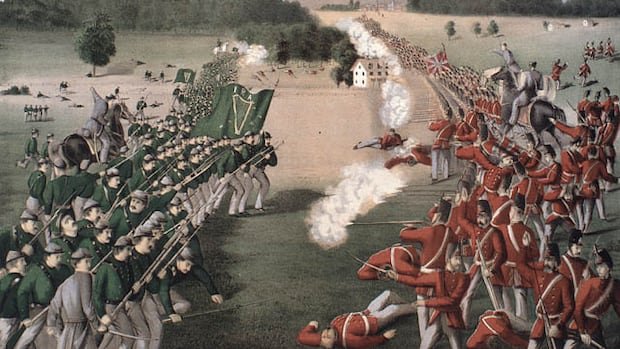

An unnoticed clash on Canadian territory just twelve months before Confederation may not resonate widely among Canadians beyond Fort Erie, Ontario, but it holds significant historical importance. The Battle of Ridgeway, also known as Limestone Ridge, in 1866 marked the first instance of Canadian troops led by Canadian officers engaging in combat. Additionally, it served as the inspiration for Decoration Day, a precursor to Remembrance Day still commemorated annually in certain regions of the country.
Despite its historical significance, the names of the nine soldiers who perished in the battle are absent from the Books of Remembrance, a compilation on Parliament Hill memorializing those who died in service to Canada. A new petition, to be presented in the House of Commons, aims to include these fallen individuals and the numerous others who lost their lives following the skirmish.
Conservative MP Fred Davies, representing the Niagara South riding encompassing Fort Erie, where the battle unfolded, emphasized the importance of honoring those who made the ultimate sacrifice in defense of Canada. The Battle of Ridgeway, though not a resounding victory for the Canadians, saw inexperienced volunteers confronting Fenian raiders, many of whom were veterans of the American Civil War.
Historian Peter Vronsky, author of “Ridgeway: The American Fenian Invasion And The 1866 Battle That Made Canada,” highlighted the rapid mobilization of hundreds of Canadians from the Golden Horseshoe region. Despite facing challenges such as inadequate supplies and ammunition, the Canadian forces engaged the invaders in combat, ultimately forcing the Fenians to retreat back to the U.S. side of the Niagara River.
While the outcome of the battle may have been a defeat on the battlefield, the sacrifices made by the fallen soldiers remain significant. Davies stressed the importance of recognizing and honoring those who defended Canada against external threats, regardless of the battle’s outcome.
A memorial commemorating the nine soldiers who lost their lives in the Battle of Ridgeway was erected in 2016, yet efforts to include their names in the Books of Remembrance have thus far been unsuccessful. Fort Erie Mayor Wayne Redekop underscored the pivotal role these individuals played in shaping Canada’s history and advocated for their rightful recognition.
Despite occurring prior to the formation of Canada as a nation, the Battle of Ridgeway had a lasting impact on the country and played a role in shaping Confederation. Vronsky suggested that the battle galvanized support for the idea of a unified Canada, with regiments that participated in the 1866 battle still in existence today.
Alexander Muir, renowned for composing “The Maple Leaf Forever,” fought in the Battle of Ridgeway and drew inspiration from the iconic maple leaf. Vronsky highlighted the significance of Canadians fighting for their homeland, symbolized by the maple leaf, marking a shift from being British colonial subjects to defending their own communities.
The Battle of Ridgeway, though not widely known, holds a significant place in Canadian history, showcasing the early struggles and sacrifices made by Canadians in defense of their homeland.