
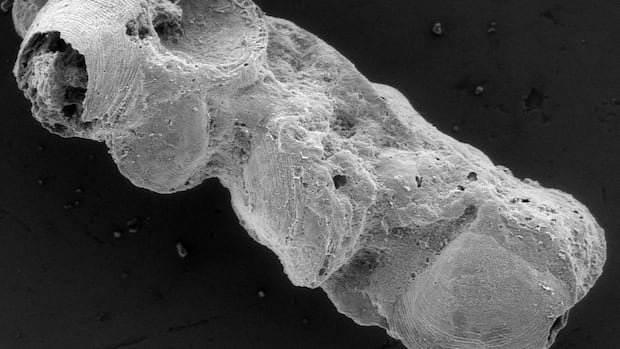

Long before the era of dinosaurs, a surge in biodiversity led to the appearance of early forms of modern animals and an increase in waste. A recent study sheds light on the significance of coprolites, or fossilized feces, in understanding ancient Earth ecosystems, nutrient cycles, and animal interactions. Published in the journal Trends in Evolution & Ecology, the research delved into fecal fossils from the Cambrian period, dating back approximately 540 million years.
By examining fecal records from primitive worms, invertebrates, and mollusk-like organisms, scientists discovered that fecal matter played a crucial role in enhancing deep water ecosystems’ habitability and nutrient availability during the Cambrian period, long before the age of dinosaurs. The abundance of feces during this period is pivotal in deciphering the origins of present-day ocean ecosystems.
Julien Kimmig, co-author of the study and head of the paleontology division at the Karlsruhe Natural History Museum in Germany, emphasized the importance of understanding the role of waste in sustaining both ancient and modern ecosystems. The analysis of coprolites not only reveals insights into past animal diets and interactions but also provides clues about Earth’s ecological dynamics and the evolutionary changes that occurred during the Cambrian Explosion.
The study, conducted by Kimmig and Russell Bicknell, examined hundreds of coprolites from various global deposits, ranging from burrowing worms to marine organisms like brachiopods and hyoliths. These fossilized feces, starting as microscopic traces and evolving into larger deposits resembling rabbit droppings over millions of years, offer valuable information on the ecosystem transformations that took place during the Cambrian period.
Beyond unraveling evolutionary mysteries and predator-prey relationships, studying coprolites aids in comprehending how Earth’s ecosystems adapted to environmental shifts, highlighting the potential applicability of ancient ecological knowledge to modern and future scenarios. The insights gleaned from coprolite research contribute significantly to understanding the complexities of past, present, and potential future ecosystems.