
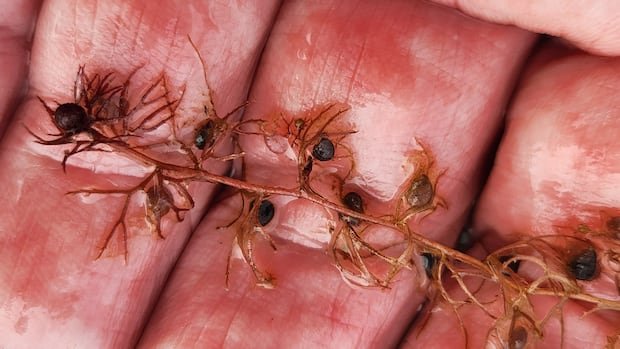

Plant enthusiast Klaus Koehler discovered a rare species, bladderwort, in the Sylvia Grinnell Territorial Park near Iqaluit, suggesting potential implications for invasive plants in the Arctic due to climate change. The carnivorous bladderwort, typically found further south, was found covered in small black balls containing digested flies, a sight rarely seen in the tundra. This discovery echoes a similar finding in 2012 near Kimmirut, emphasizing the unique biodiversity of the Arctic region.
Koehler’s observation hints at a changing climate, with warmer temperatures enabling the migration of plant species not native to the Arctic. This shift could alter the ecosystem significantly, as invasive species find a more favorable environment to thrive. The concern extends to the potential introduction of non-native plants through various means, such as bird dispersal and human activities, threatening the native flora’s balance.
While the bladderwort discovery is not expected to disrupt the ecosystem significantly, the influx of invasive species poses a significant risk. Studies suggest over 2,500 plant species could potentially invade the Arctic, jeopardizing the region’s delicate ecological balance. Experts like Paul Sokoloff emphasize the need to monitor and understand these changes to mitigate potential threats to the Arctic’s native biodiversity.
Koehler plans to send a sample of the bladderwort for further analysis, aiming to enhance scientific knowledge of the plant’s expansion into the Arctic. This collaborative effort highlights the importance of proactive research and conservation measures to preserve the Arctic’s unique ecosystem amidst ongoing environmental shifts.