
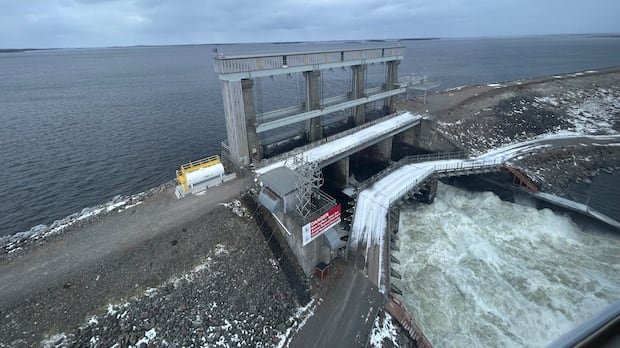

New information has surfaced regarding a fresh agreement concerning Churchill Falls between Newfoundland and Labrador (N.L.) and Quebec, outlining intentions to increase energy production and distribution arrangements.
Reports from undisclosed sources revealed to CBC News earlier this week that a memorandum of understanding was nearing finalization between the provinces, with an official announcement expected in the upcoming week. As initially disclosed by Radio-Canada, insiders familiar with the situation indicated that each province is set to receive a significantly larger share of electricity compared to the previous arrangement. Quebec is expected to obtain around 10,000 MW, while N.L. is likely to secure between 2,350 MW and 3,000 MW, with some specifics yet to be finalized.
To achieve the augmented electricity generation, both parties have agreed to enhance the capacity of the hydroelectric facility at Gull Island and further upgrade the turbine output at the existing Churchill Falls plant. Additionally, the new agreement incorporates wind power, a component absent in the previous 2024 memorandum.
Regarding pricing, sources suggested that the selling price of electricity is anticipated to remain relatively stable, with the major distinction between the two agreements lying in the inclusion of wind power.
Minister Lela Evans, in discussions with reporters, refrained from divulging detailed information on the new memorandum, emphasizing the government’s focus on creating opportunities, generating employment, and enhancing financial prosperity for residents. The discussion steered towards a funding announcement at Confederation Building.
Labrador City Mayor Jordan Brown expressed anticipation for the potential benefits of a new Churchill Falls agreement in ameliorating energy supply in the region. The updated deal reportedly guarantees transmission access of 985 megawatts through Quebec, enabling N.L. to export Churchill River electricity through Quebec’s transmission network to other markets, offering prospects for diverse project utilization.
Gabe Gregory, a consultant who analyzed the 2024 Churchill Falls agreement, acknowledged the potential significance of expanded market access. He emphasized the importance of scrutinizing the details of the new memorandum through independent review and emphasized the need for transparency and public discourse in decision-making concerning resource utilization.
Friends of Renewable Churchill Energy chair, Ben Oates, noted similarities between the new and previous agreements, highlighting the opportunity for fair value exchange in power transactions. He called for sustained negotiations and cautioned about potential political implications, particularly with an upcoming election in Quebec.
Overall, stakeholders are cautiously optimistic about the evolving Churchill Falls deal, recognizing the potential benefits while also advocating for accountability and public engagement in shaping the region’s energy future.