
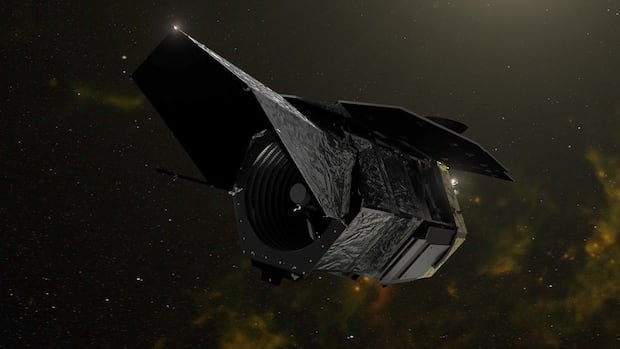

At 7:26 a.m. on Sunday, a new space telescope is scheduled to launch from Cape Canaveral, Florida, atop a Falcon Heavy rocket. The Nancy Grace Roman Space Telescope, named after NASA’s first chief astronomer, aims to uncover fresh insights about our universe. Positioned 1.5 million kilometers away at the L2 point, where gravitational forces enable stable satellite orbits, this telescope embarks on a five-year mission with potential extensions.
Distinct from existing orbiting telescopes like the Hubble Space Telescope and the James Webb Space Telescope, Nancy Grace Roman is equipped with unique features. Boasting a 2.4-meter mirror akin to the Hubble, it also features a coronagraph for blocking starlight to reveal exoplanets orbiting distant stars. Moreover, its Wide Field Instrument matches Hubble’s sensitivity but can image a region 100 times larger, offering enhanced observational capabilities.
With the ability to resolve billions of stars, Nancy Grace Roman’s camera facilitates diverse sky and stellar surveys. The telescope’s significance lies in the anticipated discoveries it may yield. One key focus is the exploration of exoplanets. By leveraging methods like the transit approach, where slight starlight dips signal planetary transits, the telescope aims to study a vast star sample, potentially unveiling thousands of exoplanets.
Additionally, Nancy Grace Roman will employ microlensing, enabling deeper exoplanet investigations and enhancing the search for Earth-like planets. Beyond exoplanets, the telescope will delve into dark matter and dark energy mysteries. Dark matter, constituting 27% of the universe, binds galaxies and stars, while dark energy, comprising 68%, accelerates cosmic expansion. By scrutinizing galaxies and globular clusters, Nancy Grace Roman seeks to map dark matter distributions and explore the enigmatic realm of dark energy.
This telescope promises groundbreaking insights into celestial phenomena, from exoplanets to dark matter and dark energy, shaping our understanding of the cosmos.