
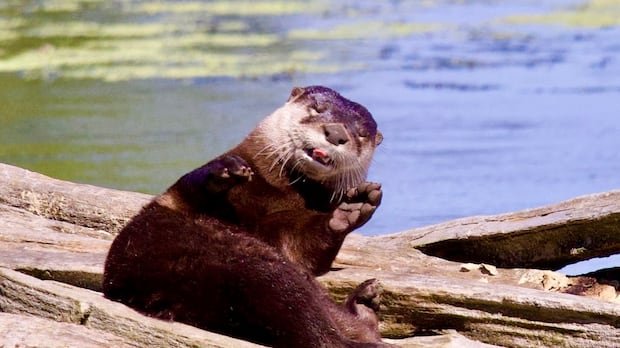

Wildlife enthusiast Terry Chettle was capturing images of a green heron at Grimsby Wetlands in early August when both he and the bird were taken aback by an unexpected visitor. “Out of the blue, this river otter began playfully engaging with the heron,” shared Chettle, a resident of Beamsville, Ontario. Expressing surprise at the otter’s presence in the area, which is uncommon, Chettle seized the opportunity to photograph the otter as it moved to a log and engaged in preening. “It really performed for me,” Chettle recounted, mentioning the playful gestures of sticking out its tongue and waving.
On the same day, Bruce and Laurie Mackenzie encountered Chettle while strolling in the wetland, where he pointed out the otter. Bruce Mackenzie acknowledged the rarity of the sighting, stating that to his knowledge, the Aug. 3 encounter marked the first sighting near the wetlands in recent recollection. He added that there have been no reports of the otter being spotted since that weekend. The wetland, previously a site for sewage storage by the Niagara Region, is now managed by the Hamilton Naturalists’ Club, encompassing around 12 hectares along Lake Ontario’s South Shore. Mackenzie, who is involved with the naturalists club as the wetlands project manager, highlighted the positive implications of the otter sighting on habitat restoration and water quality, noting previous sightings of rare species like least bitterns, Ontario’s threatened small herons.
The otter sighting underscores the success of conservation efforts, with various species flourishing in the rewilded Golden Horseshoe region, as mentioned by Mackenzie. Laura Timms, a natural heritage management program manager at Credit Valley Conservation, described otters as a conservation success story. Credit Valley Conservation, responsible for overseeing the Credit River watershed including parts of Mississauga and Peel Region, published an article in 2025 detailing the resurgence of river otters in the area. Timms emphasized the positive trend in otter sightings, contrasting with past assumptions of misidentifications with minks due to increased documented instances, including otters giving birth at conservation areas like Rattray Marsh and Jim Tovey Lakeview this year.
Despite the historical decline in river otter populations in the 1800s due to hunting, degraded water quality, and habitat destruction, Timms highlighted the current rebound in North American populations. Efforts spanning decades have transformed degraded environments into healthier ones, fostering the recovery of various species. Timms stressed the importance of continued efforts to restore and safeguard habitats to support biodiversity, underscoring the significance of wetlands in sustaining diverse species, sequestering carbon, and mitigating flooding risks.