
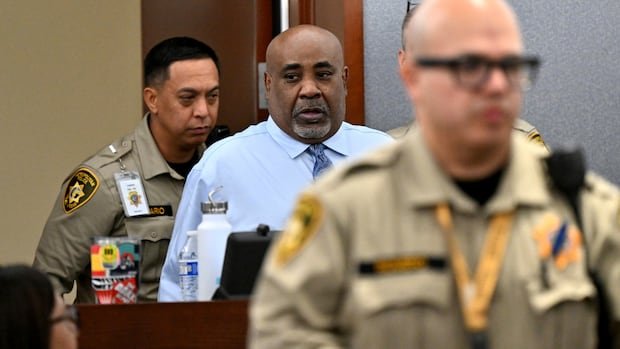

A former gang member’s trial for the unsolved shooting of iconic rapper Tupac Shakur has commenced with jury selection, nearly three decades after the musician’s tragic death. Duane (Keffe D) Davis, aged 63, is facing a murder charge related to Shakur’s 1996 death in Las Vegas. While not admitting guilt, Davis has been in custody since 2023. The trial is anticipated to last around a month, starting with the jury selection process.
The prosecution’s strategy does not focus on proving that Davis was the one who pulled the trigger but rather on establishing him as the “shot caller,” the leader of the group that targeted Shakur on September 7, 1996. In a courtroom in Las Vegas, Davis, dressed in a blue shirt and tie, sat beside his attorney as potential jurors were screened by Nevada Judge Carli Kierny.
Shakur’s cousin, William Leslane, expressed some skepticism about the trial, acknowledging that while it might bring some accountability, true justice may be elusive after so many years. With the passage of time, the pursuit of justice has been perceived as weakened, according to Leslane.
The trial will heavily rely on evidence from a book authored by Davis, where he details his alleged involvement in the shooting. Shakur, a prominent figure in the rap scene, was known for his hits like “Dear Mama” and “California Love.” The artist, associated with West Coast hip-hop, released numerous albums during his lifetime and posthumously.
The fatal shooting occurred while Shakur and Marion (Suge) Knight, the co-founder of Death Row Records, were driving in Las Vegas after attending a boxing match. Both were targeted in the attack, resulting in Shakur’s tragic death six days later. The incident sparked widespread speculation and conspiracy theories, including claims that Shakur might still be alive.
Davis’s narrative in his book suggests that the shooting was driven by revenge, stemming from an altercation earlier that evening involving his nephew and individuals associated with Death Row Records. The upcoming trial is expected to hinge on key pieces of evidence, including Davis’s memoir and related interviews.
Reflecting on Shakur’s legacy, Davis expressed remorse for the tragic event, acknowledging the artist’s immense talent and potential. Shakur’s multifaceted career in music, acting, and poetry, along with his political activism, continues to resonate with fans and scholars, highlighting his dynamic impact on the hip-hop scene.