
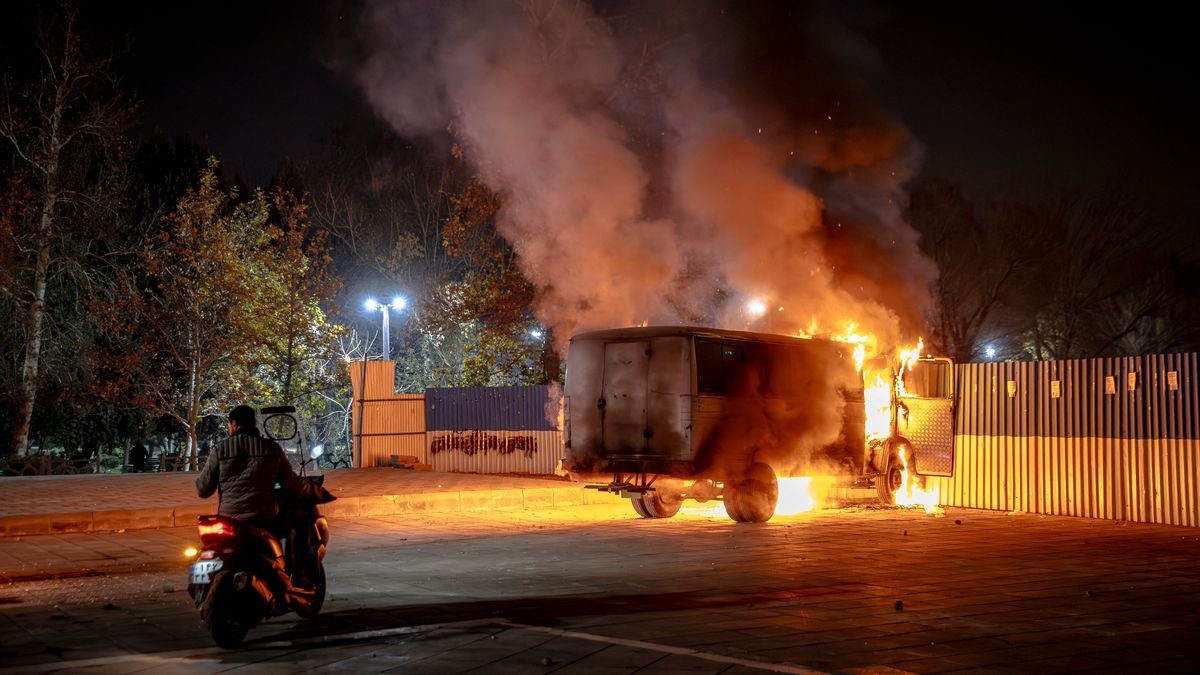

In recent times, Iran has witnessed widespread protests as citizens have taken to the streets to voice their opposition against the governing authoritarian theocracy.
Following the demonstrations, the Iranian government has responded harshly, cracking down on protesters, with reports from human rights organizations suggesting that more than 2,400 individuals may have lost their lives during the crackdown.
The accurate determination of casualty figures has been challenging due to the government’s decision to shut down the internet, hindering protesters’ ability to communicate and share information.
Despite the challenges, there is optimism among both domestic and international observers that the current rule of Ayatollah Ali Khamenei could be coming to an end, potentially paving the way for democratic reforms in the nation.
Speaking to The Times, comedian and actor Omid Djalili, who has been a vocal advocate for Iranians living under oppressive rule, shared poignant insights. Omid, known for his appearances on BBC programs such as Live at the Apollo and the Royal Variety Performance, recounted a heartbreaking incident where a friend’s brother was killed by Iran’s security forces.
Detailing the ordeal, Omid revealed that the family was coerced by the regime to pay $5,000 (£3,700) for the release of the body and to sign a false declaration implicating the victim. He condemned such manipulative tactics, labeling them as heinous acts perpetrated by the authorities.
Moreover, Omid highlighted varying estimates of the death toll, ranging from 2,000 to 12,000 individuals, emphasizing the brutality witnessed during the protests, including the tragic shooting of young protesters by security forces.
This is not the first time Omid has spoken out against the Iranian regime’s actions. In a separate interview with Andrew Marr on LBC, he denounced the regime’s extreme measures, citing instances where innocent civilians were targeted and families were forced to pay for the bullets used to kill their loved ones.
The unfolding events in Iran continue to draw international concern and condemnation, with calls for justice and respect for human rights echoing across the global community.