
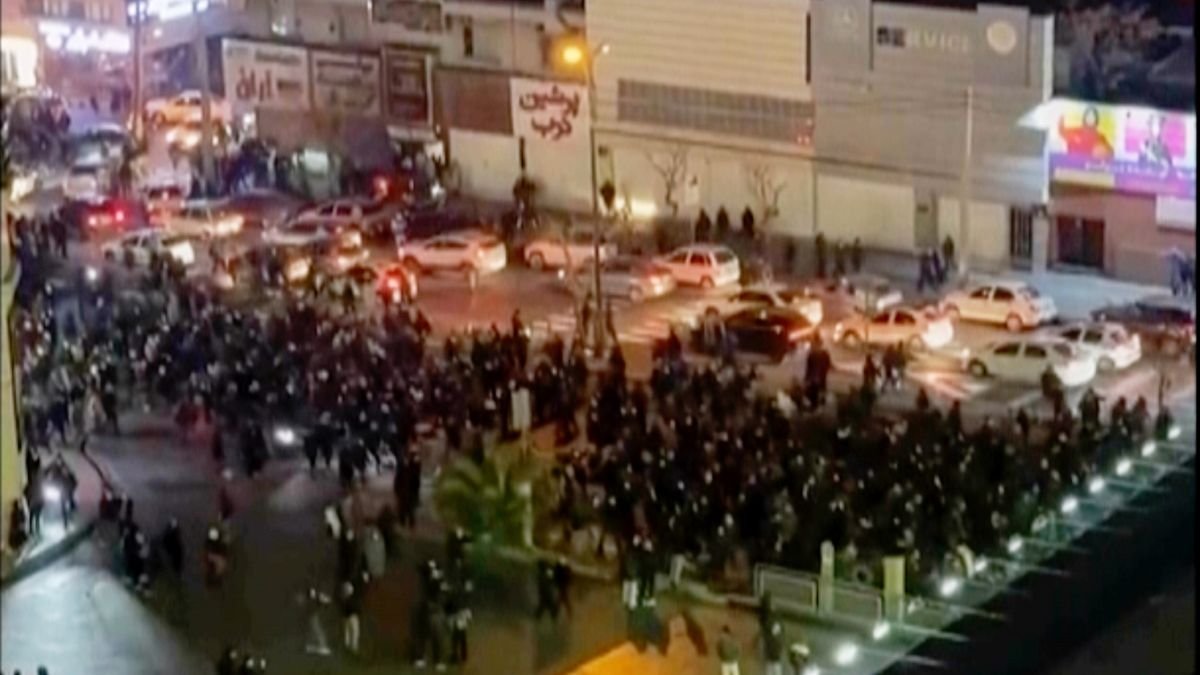

Iran’s regime, despite facing internal challenges, retains its capability for brutality and oppression following a harsh crackdown on nationwide protests, according to the former head of MI6. Sir Richard Moore highlighted the widespread nature of the protests, involving diverse groups from across Tehran, driven initially by economic grievances due to the regime’s failure to address economic issues.
While acknowledging the regime’s weakened state due to international setbacks and internal mismanagement, Sir Richard cautioned that its propensity for violence and repression remains a threat. US President Donald Trump hinted at potential negotiations with Iran, indicating a willingness to engage in talks while not ruling out a response to the ongoing situation.
Regarding US involvement, Sir Richard emphasized the importance of Iranians determining their own future, suggesting that any external support for the protesters should be carefully considered to avoid unintended consequences. Reports emerged suggesting that Keir Starmer is under pressure to designate Iran’s Islamic Revolutionary Guard Corps (IRGC) as a terrorist entity, with Sir Richard noting the symbolic rather than practical impact of such a move.
UK Cabinet minister Peter Kyle mentioned the government’s utilization of sanctions against Iran and the complexities of proscribing state entities under domestic legislation. Emphasizing the government’s concern for civilians in Iran, Kyle highlighted ongoing efforts to coordinate with international partners to exert pressure on Iran through various means.
Overall, the situation in Iran remains complex, with internal and external dynamics shaping the response to the protests and the regime’s actions. The international community continues to monitor developments closely as tensions persist within the country.