

In 2025, global temperatures saw a decline, though concerns persist regarding the ongoing impacts of climate change on communities around the world. Wildlife faces significant threats due to changing habitats and worsening environmental conditions.
Despite these challenges, various organizations and advocates are working to improve conditions for animals globally. One approach involves constructing infrastructure that facilitates the movement of wildlife over or around human-made obstacles.
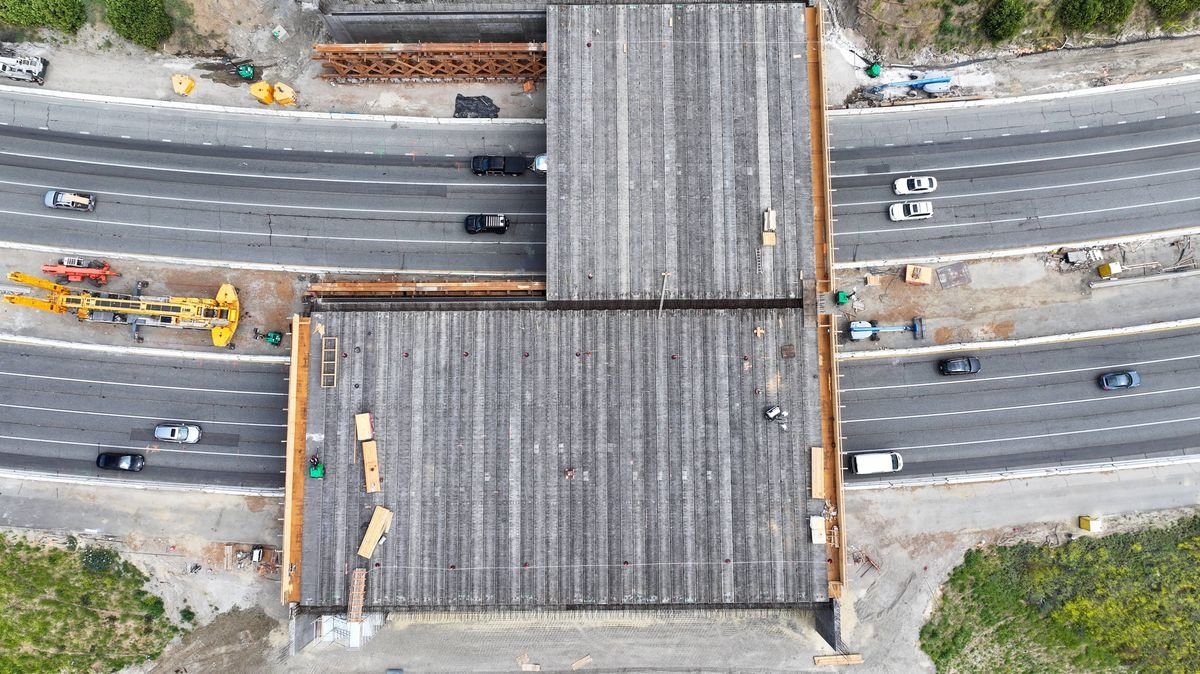
One prominent example is the Wallis Annenberg Wildlife Crossing, currently being built northwest of Los Angeles. Once finished, it will be the largest animal crossing globally, spanning the 101 Freeway in Agoura Hills.
The £68 million project has been in the works for decades, with construction starting in early 2022. Initially slated for an early 2026 opening, the launch has now been rescheduled to November 2026 due to weather-related delays caused by storms in the region.
Beth Pratt, a project spokesperson, explained that the storms necessitated redoing work on the massive supports and surrounding groundwork multiple times due to soil compaction issues.
Despite the nearly year-long delay, there is optimism that the crossing will still provide significant benefits to local wildlife by reducing the number of animal fatalities caused by vehicle collisions. A similar crossing in Utah has reportedly reduced animal-to-vehicle incidents by 77%.
Beth, who also serves as California’s regional director for the National Wildlife Federation, emphasized the importance of finding solutions to protect the area’s wildlife, highlighting the need to prevent the extinction of the mountain lion population.
The crossing is named after Wallis Annenberg, a philanthropist and advocate for science and education initiatives, who passed away at the age of 86. Her family described her as a resilient spirit who will be remembered for her contributions to environmental causes and her enduring wisdom.