
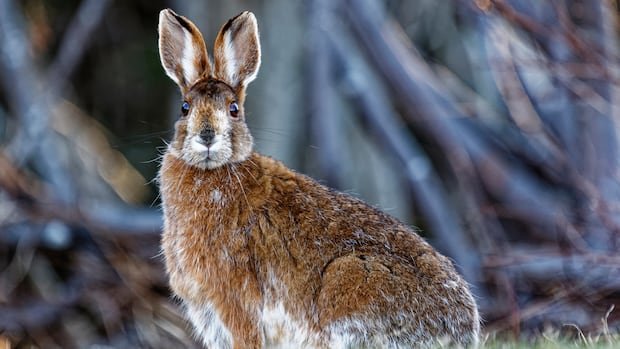

Snowshoe hares have become more prevalent on Prince Edward Island following post-tropical storm Fiona, according to a wildlife biologist from the province. Garry Gregory from P.E.I.’s fish and wildlife division mentioned an increase in sightings of what people initially mistook for rabbits in their yards. However, Gregory clarified that these animals are actually snowshoe hares, as rabbits are not native to the region.
While there is no official data tracking the growth of the snowshoe hare population, Gregory suggested that changes in the landscape post-Fiona make it plausible that their numbers have risen. The storm aftermath left behind dense debris in forests across P.E.I., providing ideal escape cover for hares. This cover allows more hares to survive, potentially leading to a population increase.
The new growth resulting from the storm, due to trees being knocked down and sunlight reaching the forest floor, has benefitted snowshoe hares. Early successional plants like willows, grey birch, maples, and pin cherry have thrived, offering prime winter forage for the hares.
The improved habitat also benefits other wildlife species that utilize early successional growth, such as songbirds and woodcock. Despite the rise in hares, Gregory noted that predator numbers in P.E.I. are not directly correlated to hare populations, as predators on the island are generalists.
Gregory advised Islanders not to feed the hares they encounter in their yards, as it is unnecessary and could attract them closer to potential dangers like dogs. He also addressed concerns about ticks on hares, emphasizing that the tick species commonly found on hares do not pose significant health risks to humans or the animals themselves.
Overall, the changing landscape post-Fiona has created a more favorable environment for snowshoe hares on Prince Edward Island, with potential long-term impacts on the local ecosystem.