
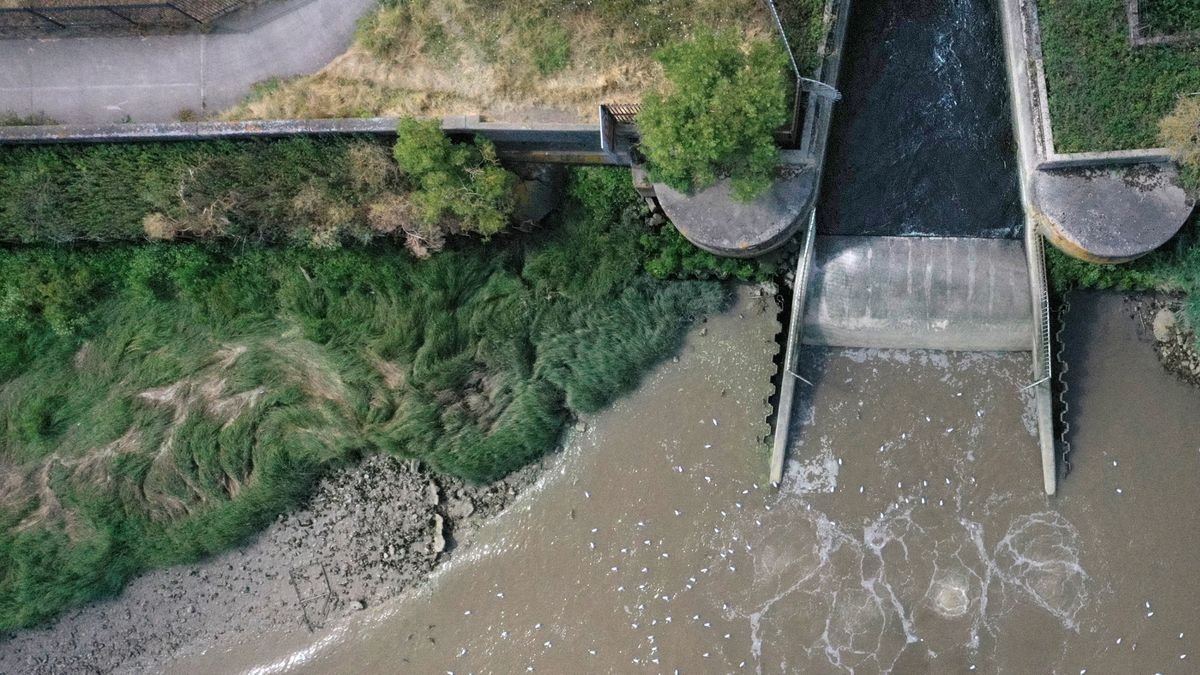

Around 85% of rivers in England have not met the required water quality standards, according to the latest findings by the Environment Agency. Despite significant investments by the water industry, the quality of rivers remains stagnant since 2019, leading to concerns about sewage discharge into water bodies and rising bills for households.
Moreover, several regions in the country are facing hosepipe bans due to prolonged drought conditions, with critics pointing out insufficient efforts by companies to address water leaks. The Environment Agency’s assessment revealed that only a small percentage of surface waters in England, including rivers, lakes, canals, and estuaries, meet the ecological standards set by the Water Framework Directive Regulations.
The report highlighted that a significant number of rivers tested positive for phosphates, originating from sources like raw sewage and agricultural runoff. The percentage of water bodies classified as having good ecological status has declined compared to the previous assessment in 2019, indicating a need for enhanced environmental protection measures.
Environment Secretary Angela Eagle emphasized the necessity for comprehensive reforms in the water sector to ensure cleaner waterways for local communities. The Environment Agency and stakeholders are working towards improving enforcement measures and investing in infrastructure upgrades to address the challenges faced by England’s water bodies.
Concerns have been raised by various groups and campaigners, urging for stricter regulations on water companies to prevent further pollution of rivers and other water sources. The call for public ownership of water utilities has gained momentum, with demands for increased accountability and investment in sustainable water management practices.