
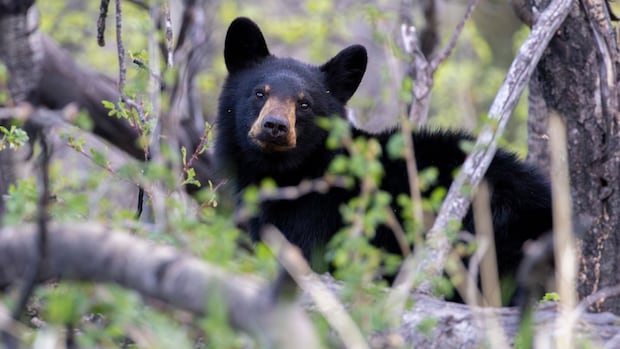

In the first three weeks of October, Yukon conservation officers euthanized seven bears throughout the territory, with all but one exhibiting food-conditioned behaviors after accessing garbage.
According to the environment department’s data, four incidents were reported in the Whitehorse area. These included cases in the Crestview neighborhood of the city, near the Carcross cutoff, and around the Pilot Mountain subdivision. Additionally, there was one incident each in the Carmacks and Watson Lake regions.
The one bear that did not exhibit food-conditioning was reported to have “demonstrated food-seeking behavior causing damage to property” in the North Alaska Highway vicinity near Haines Junction, as stated by department spokesperson Linea Volkering in an email.
According to TJ Grantham, the deputy chief of field operations for Yukon Conservation Officer Services, bears that gain access to calorie-rich food sources like garbage or compost “become highly motivated to keep accessing it.”
This year, he noted, the situation has been exacerbated by a significantly low berry crop across much of southwest Yukon, which is driving bears to seek alternative food sources as they prepare for winter.
“It’s important to understand that euthanizing animals is always a last resort,” Grantham remarked. “The initial approach should always be to reduce and manage attractants.”
The department cautioned that bears accustomed to human food sources may lose their fear of people, homes, and vehicles, leading to aggressive behavior in their attempts to obtain more food, which can pose safety risks to the public.
Grantham mentioned that conservation officers continue to receive reports of bear activity during this time of year, indicating that residents of Yukon need to stay “bear-aware.” This includes making sure outdoor garbage bins, compost piles, and chicken coops are securely locked. He also urged anyone observing a bear displaying troubling behavior to report it right away.
Grantham explained that the quicker conservation officers can respond to a bear, the greater the likelihood of employing non-lethal deterrents and hazing techniques to prevent it from becoming food-habituated, thereby avoiding escalation of the situation.