
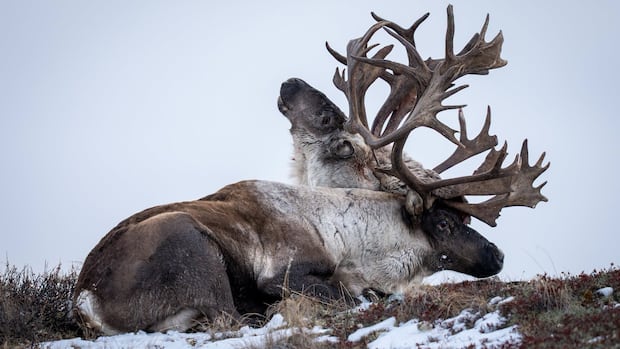

WARNING: This article features graphic images of wildlife.
Earlier this month, wildlife photographer Peter Mather, based in Yukon, was south of Whitehorse on a project documenting caribou when he observed a bear displaying unusual aggression.
“It was huffing and making noise, and we had to drive it away,” Mather recounted.
Soon after, a second bear appeared.
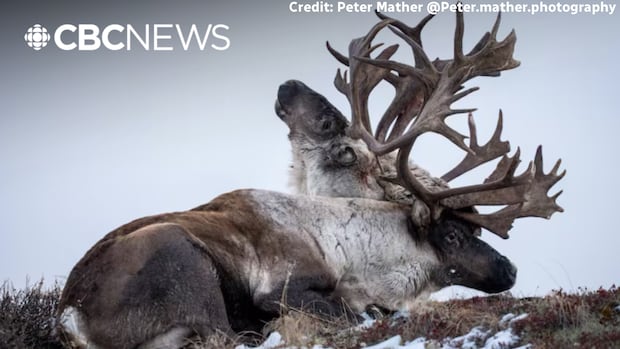
A Yukon photographer captured a caribou transporting the remains of another caribou that was entangled in its antlers. Peter Mather took these remarkable photos in early October in the mountainous region south of Whitehorse while documenting caribou rutting as part of a project associated with the Southern Lakes Caribou Recovery Plan.
“When I spotted that second bear, I thought, ‘There must be a dead caribou nearby,’” Mather stated.
He deployed a drone to investigate the situation.
“I was astonished to find… two caribou with their antlers locked together, and one was lifeless,” he shared.
Mather observed a bear attempting to attack the surviving caribou, but the living bull managed to drive the bear away.
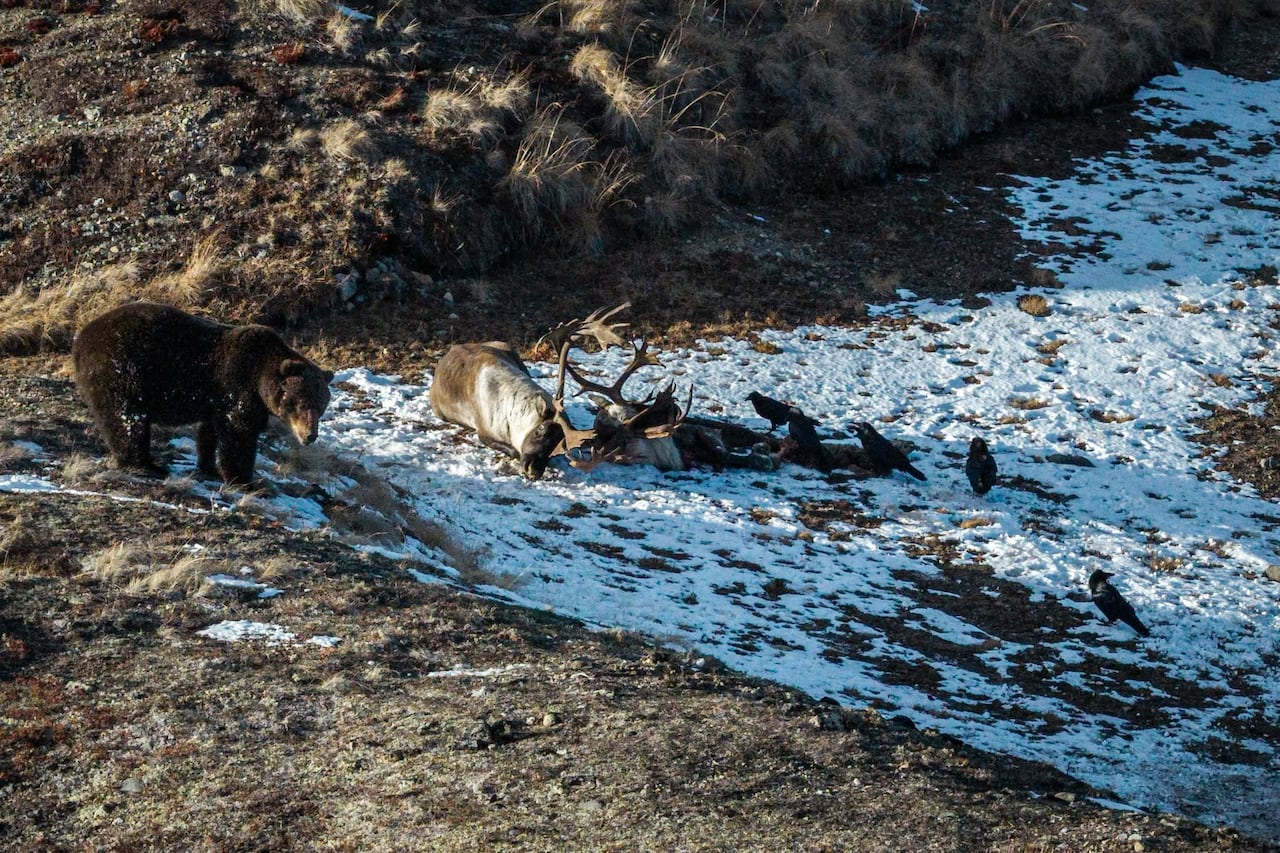
Mather photographed various wildlife scavenging on the corpse of the deceased bull caribou. Here, a bear and a group of ravens are captured in the frame. (Submitted by Peter Mather)
Mather monitored this bull caribou for several days.
“Over the four days, the carcass of the dead caribou gradually vanished,” Mather noted.
“Foxes, ravens, and golden eagles were feasting on it for four days.”
On the final day, a pack of wolves appeared, and Mather suspects they consumed most of what remained of the carcass.
“In a way, [they] sort of liberated the other caribou, allowing it to walk away eventually, albeit with two heads,” Mather explained.
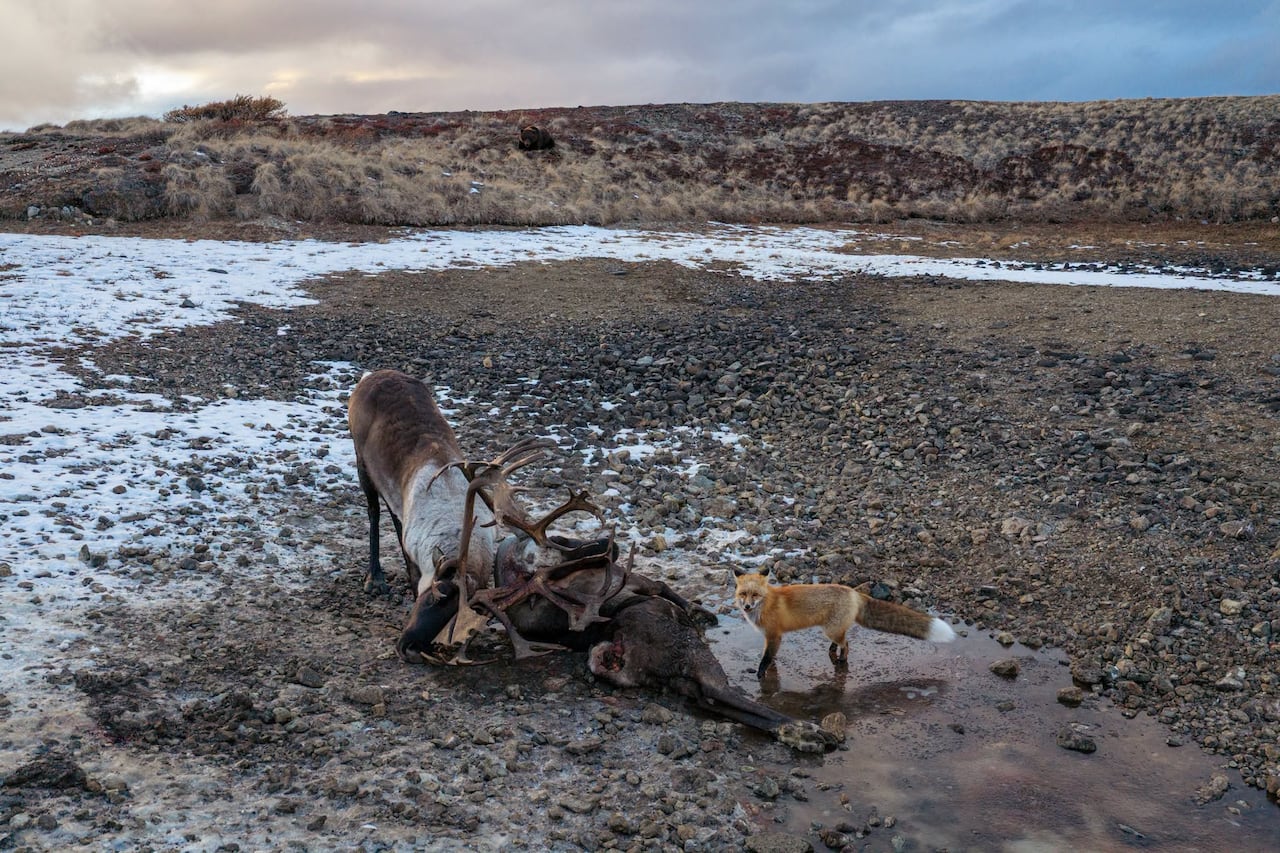
At one point, a fox visited to enjoy a meal from the deceased caribou. (Submitted by Peter Mather)
Antler locking is not uncommon
Mather indicated that after the wolves arrived and dined, the remaining caribou vanished, and he was unable to locate it.
His assignment involved capturing the rut, which is the mating season for caribou, characterized by male contests, in collaboration with the Southern Lakes Caribou Recovery Team and the Kwanlin Dün First Nation.
Lars Jessup, a biologist with the Southern Lakes Caribou Recovery Project, commented that the incident took place during a period when bull caribou are particularly susceptible.
“The rutting season is the riskiest time for bull caribou… they exert considerable energy during the rut, and predators are typically nearby,” he explained.
Jessup noted that it is somewhat common for bulls to lock antlers, citing past discoveries of skulls and skeletons of caribou with their antlers interlocked.
“It’s likely that when this occurs, both caribou perish rather than one surviving,” Jessup remarked, labeling the living caribou as “fortunate.”
He added that the time for the surviving caribou to shed the extra weight is nearing.
“If it survives another month or so, it will likely shed its antlers and lose the extra burden, enabling it to endure through the winter,” Jessup stated.
“By the time people typically see them in the valleys around Christmas, the bulls are usually without antlers.”
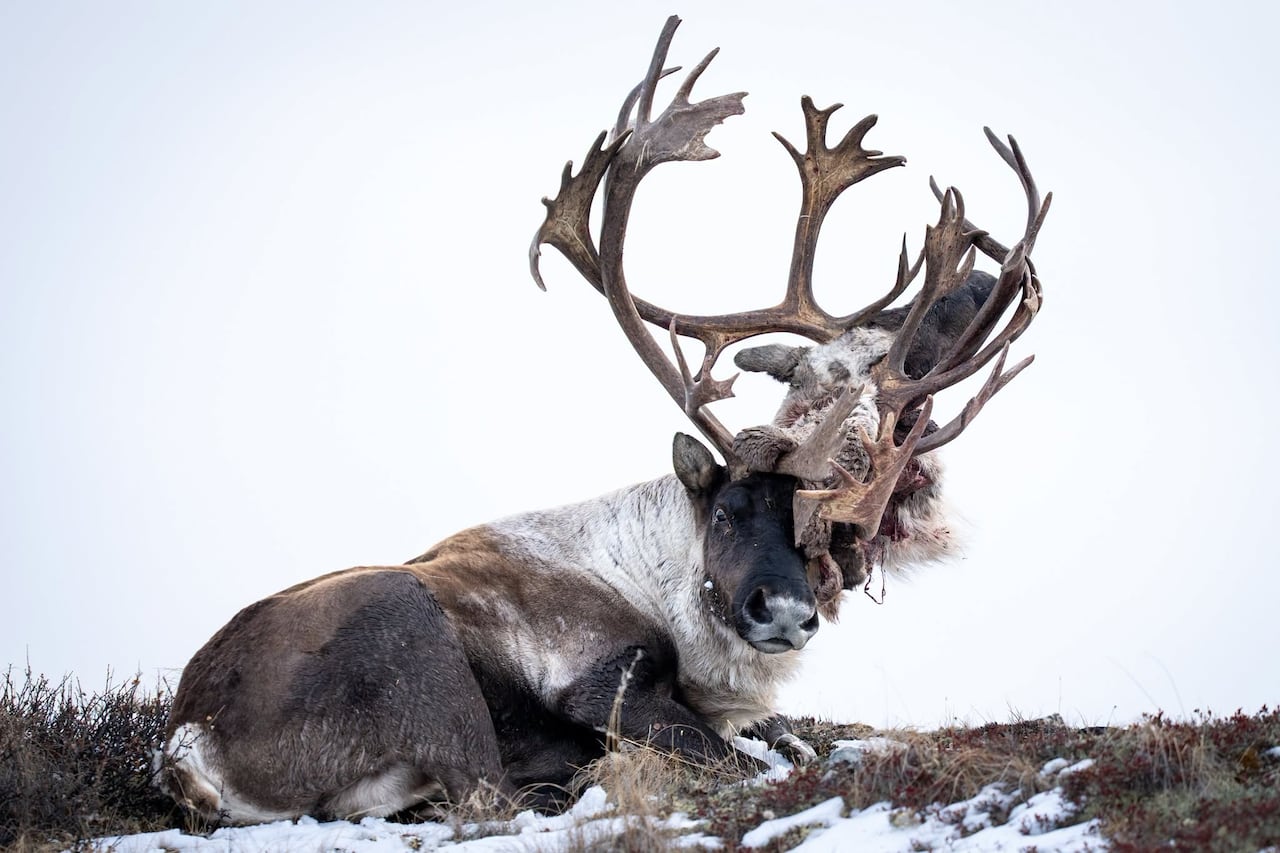
Eventually, other animals managed to relieve the surviving caribou of the burden of carrying another bull’s weight. (Submitted by Peter Mather)
A symbol of the herd’s resilience
This specific caribou belongs to the Ibex herd, according to Jessup, which is one of the four herds within the southern lakes caribou population.
It is safeguarded by the Southern Lakes Caribou Recovery Project, which has been in place for over 30 years.
“The herds have made remarkable progress in their recovery over the last three decades, thanks to extensive efforts and dedication,” Jessup stated.
Nonetheless, he expressed concerns that the natural fluctuations in the caribou population seem to be in a downturn, as there have been few calves observed in the past five years.
For Mather, the photographer, the footage he obtained of that one resilient caribou provides him with a sense of optimism.
“For me, it serves as a metaphor for the entire herd, showcasing its resilience—just an incredibly resilient caribou.”