
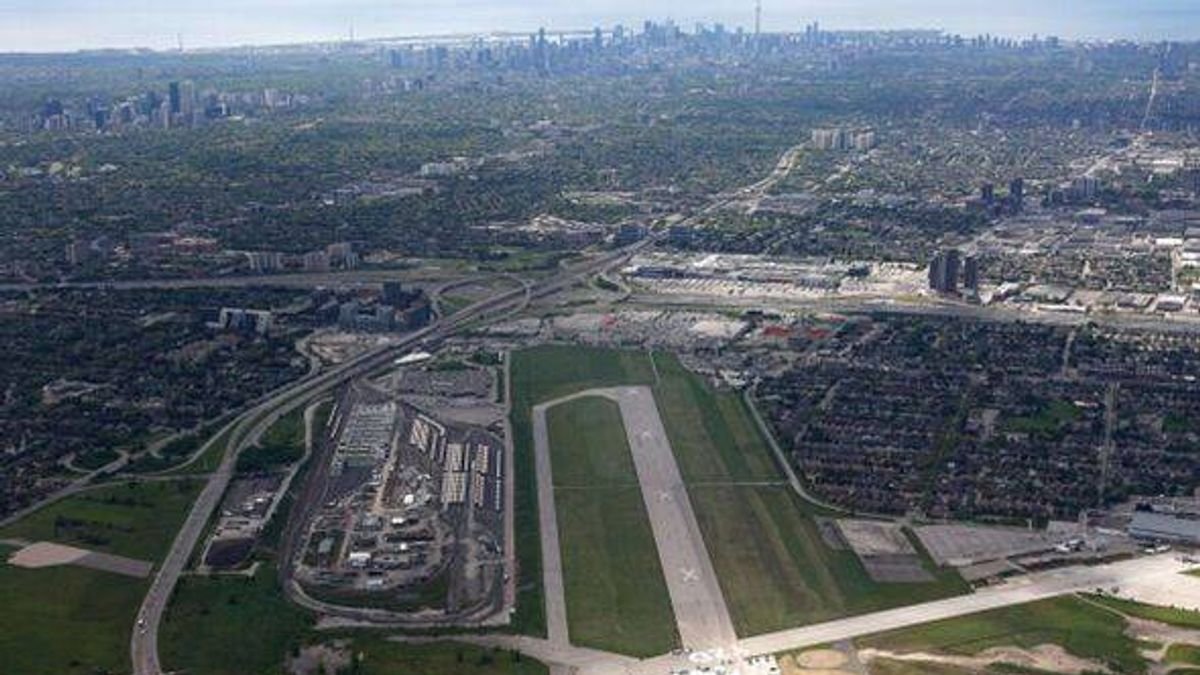

Downsview Airport, a historic airfield established almost a century ago, is undergoing a radical transformation into a vibrant city in northwest Toronto, Canada. The redevelopment project, known as YZD, will see the 370-acre site evolve into a modern urban development accommodating around 66,000 residents in over 30,000 properties, with a projected capacity for up to 83,500 individuals by 2051.
The ambitious 30-year plan involves dividing the area into seven interconnected neighborhoods that will be developed gradually. With an estimated cost of £16 billion, this initiative ranks as one of the largest urban redevelopment projects in North America.
At the heart of the transformation is the conversion of the 1.24-mile runway into a pedestrian-friendly park that will link the various neighborhoods. This repurposed runway is envisioned as a central communal space, serving as the “shared backyard” for residents and setting a new standard for public areas in Toronto.
A key focus of the project is the integration of green spaces, including approximately 70 acres of parks and open areas, designed to provide easy access to amenities for the community. The YZD initiative emphasizes the proximity of parks, open spaces, and essential services to residential and work areas, promoting a pedestrian-friendly environment.
Developers aim to preserve and repurpose existing structures from the former airport, citing ecological benefits and reduced carbon footprint compared to new construction. Notably, historic hangars built between the 1950s and 1990s will be retained and transformed into commercial spaces.
In a bid to enhance sustainability, vegetation will cover rooftops throughout the development, aiding in rain absorption, reducing flood risks, and promoting biodiversity. The site has remained vacant since 2024 following the departure of Bombardier, a Canadian aerospace manufacturer.
The transformation of Downsview Airport into YZD represents a significant step towards creating a modern, sustainable urban environment that integrates green spaces, historical structures, and innovative design concepts.