
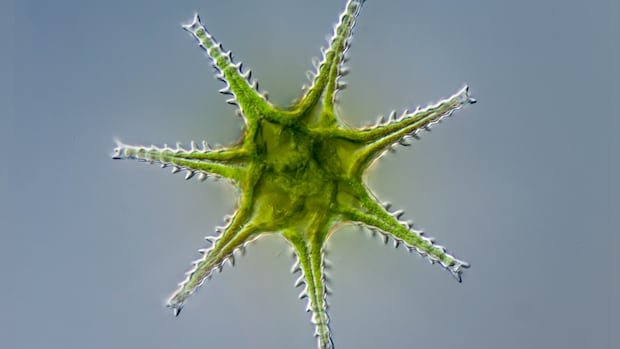

A regenerated forest can appear tall, lush, and verdant. Revived wetlands can teem with insects and flutter with birds. However, upon closer examination, scientists have discovered that some of the tiniest inhabitants, such as specific mosses, lichens, algae, and fungi, are often still absent.
Restoring ecosystems like forests and wetlands can aid in the conservation of declining animal and plant species and facilitate their recovery. Nevertheless, recent studies indicate that not all species return at the same pace. Some of the smallest, least conspicuous residents may remain scarce or missing for decades, potentially impacting other species.
Ellen Macdonald, a botanist at the University of Alberta, has dedicated her career to studying forests, focusing on the minute flowers, mosses, liverworts, and lichens that thrive in their shade, among their roots, or on the textured surfaces of their bark.
According to Macdonald, there is a significantly higher number of species in these microhabitats compared to tree species. To the casual observer, a reforested area a few decades post-logging may appear similar to an untouched forest, brimming with towering trees, birds, and insects. However, Macdonald noted a sense of something amiss while traversing regrown coniferous boreal forests, even if the specific issue wasn’t immediately evident.
Macdonald undertook a comprehensive study, amalgamating her own research with global data to analyze the duration required for plants and animals to re-establish as boreal forests regenerate following clearcutting.
The research, recently published in the journal Nature Sustainability, revealed that birch and aspen forests and their inhabitants seemed to recover within 25 years, whereas conifer forests took significantly longer. In conifer forests, understory plants, particularly lichens, mosses, and liverworts, required 85 years or more to reappear, with some species still absent after a century of available data.
The absence of certain species in regenerated habitats may impede the recovery process, with potential repercussions for the overall ecosystem. Scientists studying rehabilitated wetlands and other habitats have also observed that despite the apparent health of these areas, some less visible species remain missing.
Viktoria Wagner, an associate professor at the University of Alberta, characterizes this decline as a “silent form of loss,” where species vanish from numerous sites, diminishing the diversity found in individual locations.
Wagner’s research on “dark diversity” has unveiled evidence of this phenomenon among plants in various habitats globally. While species disappearance from specific areas may hinder their return, restoring landscapes is a complex and uncertain process, with no guaranteed success.
Understanding these ecological patterns could guide landscape managers in preserving a higher number of species. Macdonald’s findings suggest that selectively harvesting or partially clearing conifer forests could be more beneficial than clearcutting.
Algae habitats, along with their resident species, are also facing threats worldwide, as emphasized by Mekonian. Algae, often inconspicuous to the untrained eye, play a crucial role in global oxygen production and food availability.
Preserving biodiversity requires more than safeguarding isolated habitat pockets; it necessitates maintaining and restoring adequate habitat for species to thrive across the landscape. Active interventions are essential to combat continual species loss and preserve ecological balance.
Efforts such as Melkonian’s collection and cultivation of over 5,000 algal strains serve as a vital step towards safeguarding these species. Wagner emphasizes that preserving biodiversity is an ongoing process that demands sustained actions to ensure the survival of various species across ecosystems.