
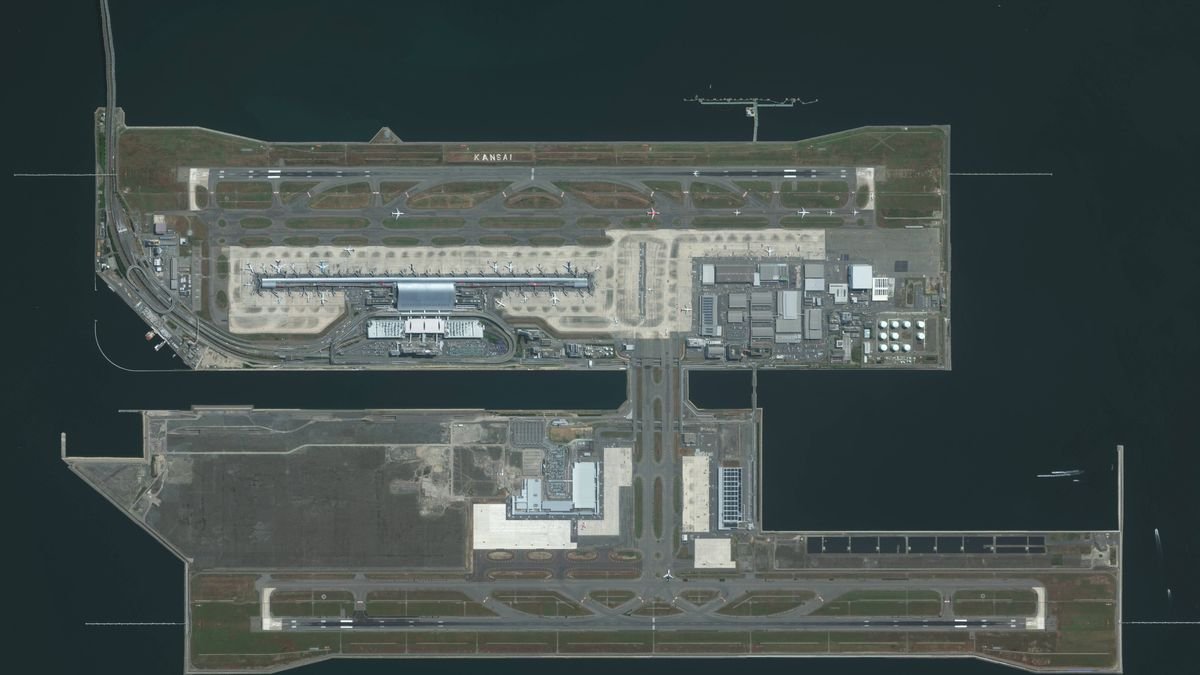

A renowned airport that holds global records is facing a concerning future as it could potentially sink under the water within the next century. Kansai International Airport, located on artificial islands in Japan’s Osaka Bay, was constructed on a seabed primarily consisting of alluvial clay, a material expected to gradually compress over time. Despite opening to passengers 32 years ago in 1994, the airport has experienced a more rapid subsidence rate than initially forecasted, dropping 42 feet instead of the anticipated 13 feet over half a century.
As the airport continues to handle a growing number of air traffic, with a significant number of take-offs and landings along with millions of travelers passing through in 2024, concerns about its sinking have been raised. Engineers, including Yukako Handa, the former communications director at Kansai Airports, expressed surprise at the stark difference between projected and actual subsidence levels.
Efforts to counter the airport’s sinking included the installation of sand drains, though the descent persisted at a faster pace than expected. Additional funding of £112 million was allocated to bolster the seawall surrounding the airport, which helped mitigate the rate of subsidence. However, forecasts suggest that if the current sinking rate persists, the airport could dip below sea level by 2056, leaving it vulnerable to storms and seismic events.
Despite these challenges, Kansai International Airport has also garnered positive attention for its exceptional record of never losing a piece of luggage over three decades of operation. This remarkable achievement has earned the airport accolades such as the ‘World’s Best Airport for Baggage Delivery’ at the esteemed Skytrax World Airport Awards.