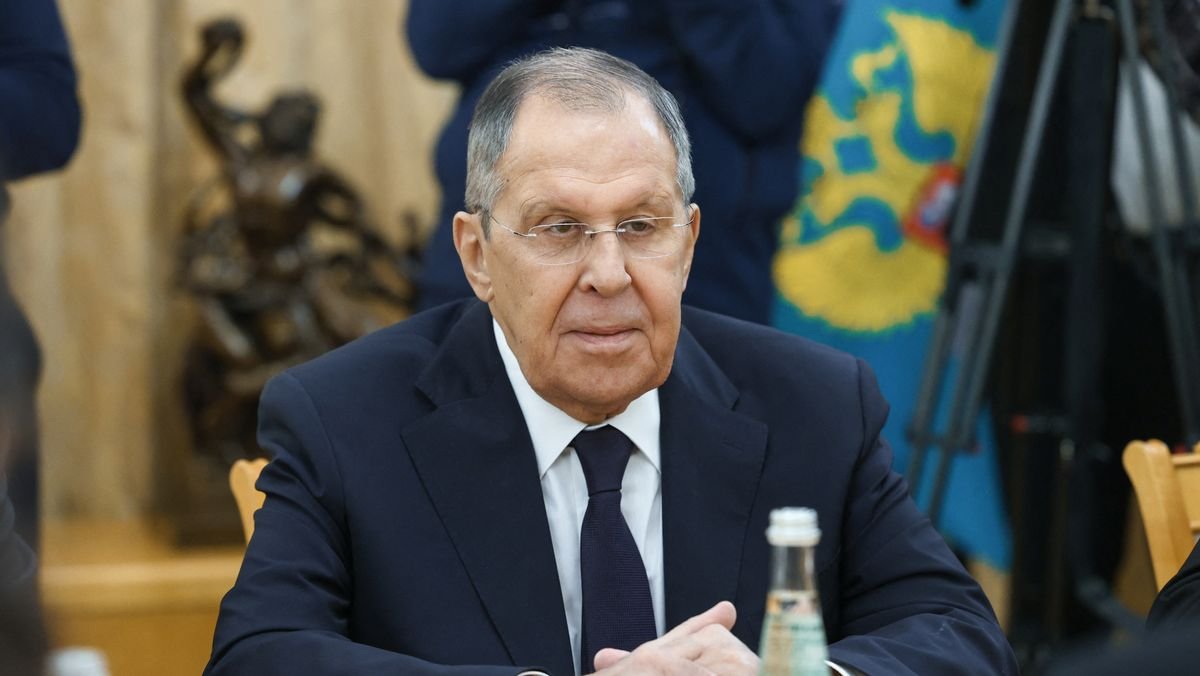

Russia’s foreign minister has proposed that Britain should consider omitting “Great” from its name, drawing a comparison to Gaddafi’s Libya. During a press conference in Moscow, Foreign Minister Sergey Lavrov expressed his opinion that Britain should simply be referred to as Britain, highlighting that it is unique in self-identifying as “Great.” Lavrov pointed out the historical example of the “Great Socialist People’s Libyan Arab Jamahiriya” under the authoritarian rule of Muammar Gaddafi, emphasizing that it no longer exists.
In Russian, the UK is commonly known as “Velikobritaniya,” which translates to “Great Britain” due to “veliko” meaning “great” or “large.” While “Great Britain” is informally used within the UK and globally, the country’s official title is the United Kingdom of Great Britain and Northern Ireland. Notably, Great Britain specifically refers to the island comprising England, Scotland, and Wales, distinguishing it from Brittany (Little Britain) in France.
The term “Great” in Great Britain historically served as a geographic descriptor to differentiate it from Brittany in France, dating back to the second century AD when Ptolemy, a Greco-Roman geographer, used “megale Brettania” (Great Britain) and “mikra Brettania” (Little Britain) in his writings.
Following his provocative remarks, Lavrov’s spokeswoman entertained a question from Ivor Bennett, a correspondent from Sky News in the UK, with Lavrov adding a quick “No offence.” These comments arose in a discussion on colonialism, sparked by recent developments in the Greenland crisis. Lavrov contended that Greenland is not inherently part of Denmark, highlighting it as a colonial acquisition that the current inhabitants have grown accustomed to.
Dismissing Trump’s claims of Moscow seeking control over Greenland, Lavrov accused European leaders of aiming to strategically defeat Russia, insinuating that they are preparing for war against the country. He singled out several European politicians, including Kaja Kallas, Ursula von der Leyen, Friedrich Merz, Keir Starmer, Emmanuel Macron, and Mark Rutte, suggesting that they are actively gearing up for conflict with Russia.
Lavrov emphasized the need for Russia to address the underlying issues surrounding the crisis involving Ukraine, asserting that for many years, the West has aimed to portray Ukraine as a threat to Russia’s security, establish a presence against Moscow’s borders, and support the regime that emerged from the 2014 coup, which he labeled as openly Nazi.