
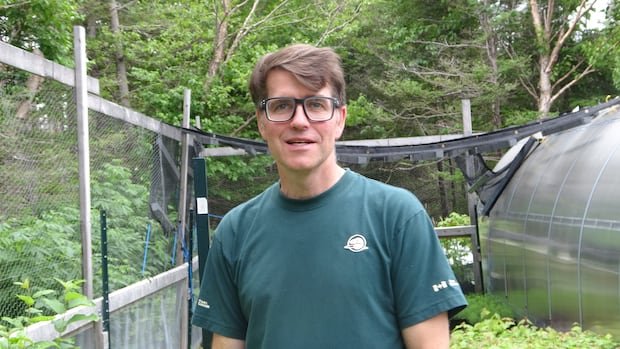

In western Newfoundland’s vast national park, crews are undertaking a significant tree-planting initiative to aid forest recovery following the impact of a once highly abundant moose population. Darroch Whitaker, an ecosystems scientist with Parks Canada in Gros Morne National Park, reported that over 730,000 trees have been planted since 2023 in areas previously transformed into grasslands by voracious moose. The plan is to continue planting for another three years, ultimately reaching 1.25 million trees across approximately four square kilometers.
The objective extends beyond mere restoration, as the teams are strategically selecting tree species capable of thriving in warmer climates to establish resilient forests resilient to the effects of climate change. Whitaker emphasized the necessity for the newly planted trees to endure for generations, considering the evolving climate patterns.
Gros Morne National Park, known for its majestic fiords and boreal forests adorned with rivers and waterfalls, spans 1,805 square kilometers in western Newfoundland and stands as the second-largest national park in Atlantic Canada. While moose are prevalent throughout Newfoundland, their numbers soared in Gros Morne due to a historical hunting ban, rendering humans as their sole island predator.
In the 1990s, the park harbored about 6,500 moose, with some regions hosting six or more animals per square kilometer, marking record densities globally. However, the unrestricted moose population led to detrimental consequences, including widespread consumption of young trees, hindering natural forest regeneration processes and resulting in bald patches known as “moose meadows.”
To address this ecological imbalance, moose hunting was reintroduced in 2011, reducing the population to 2,000 animals deemed sustainable. Subsequently, in 2023, tree planters began reforesting the barren areas with two-year-old saplings. These saplings, many nurtured at the Rocky Harbour tree nursery, encompass a diverse array of tree species, including black and white spruce, balsam fir, yellow birch, white pine, and wild cherry, tailored to withstand anticipated warmer temperatures.
By integrating trees and seeds indigenous to the park’s southern regions, the project aims to pre-adapt the forest to forthcoming climate shifts, enhancing their resilience. Whitaker stressed the significance of assisting tree migration to match the pace of climate change, emphasizing the crucial role humans play in facilitating this adaptation process.