
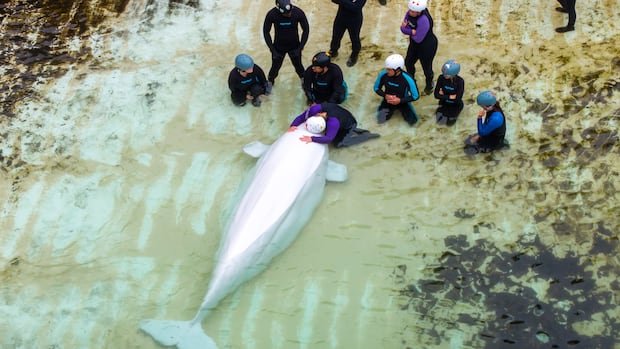

Marineland has recently completed the transfer of all its remaining captive whales and dolphins to five destinations, following a 2019 ban by the federal government on keeping captive whales in Canada. The now-closed Ontario theme park sent its last 30 belugas and four dolphins to various locations in the U.S. and Spain, marking the largest-ever transfer of these animals globally.
Regrettably, there have been casualties among the relocated marine mammals, with four belugas and one dolphin succumbing to various health issues. The most recent death occurred on September 24 at the Oceanogràfic de València in Spain, raising concerns about the well-being of the animals post-transfer.
Echo, a blind Black Sea bottlenose dolphin aged around 30, was one of the transferred animals sent to Oceanogràfic on a demanding 19-hour journey from Niagara Falls, Ontario. Despite arriving with severe vision and other medical problems requiring specialized care, Echo’s condition deteriorated rapidly, leading to his demise.
According to marine mammal experts like Naomi Rose and Valeria Vergara, the process of transporting belugas is highly stressful for these creatures due to their sensitivity to the relocation process. Psychological stress can have direct effects on their physical well-being, impacting factors like appetite and hormone levels.
The recent deaths of some belugas and dolphins in their new environments have raised questions about the impact of the transfers. Investigations are ongoing to determine the causes of these deaths and ensure the welfare of the remaining relocated animals.
Various facilities, including SeaWorld, Shedd Aquarium, and the Georgia Aquarium, have taken in the relocated belugas and are closely monitoring their health and behavior. While some whales are adjusting well, others are facing challenges with their appetite and weight gain.
Experts like Rose and Vergara express concerns about the stress and challenges faced by the relocated whales, emphasizing the unsuitability of captivity for these intelligent and social marine mammals. Despite efforts to ensure safety during the transfers, concerns remain about the long-term well-being of the animals.
The recent deaths and ongoing health concerns highlight the complexities and ethical dilemmas surrounding the captive marine mammal industry, with advocates calling for better protection and care for these animals in the future.