
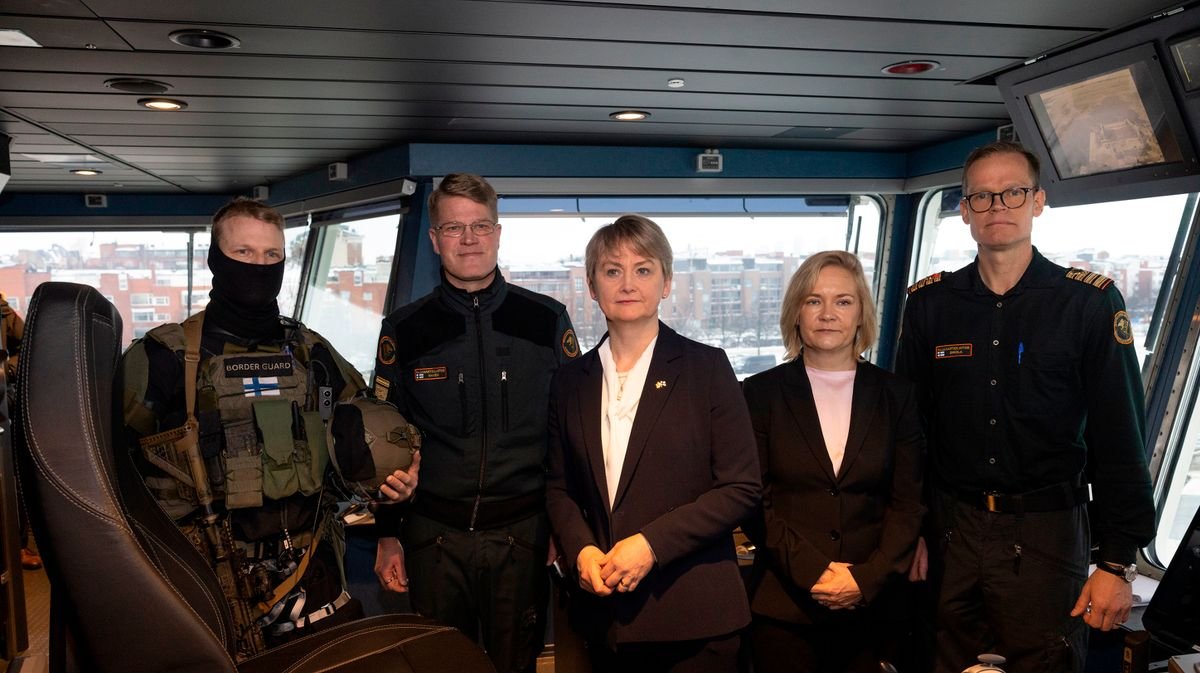

On the deck of a Finnish patrol ship, I witnessed a dramatic scene as armed individuals descended from a helicopter and swiftly took over the vessel. This event, however, turned out to be a simulation conducted by the Finnish Border Guard as part of their preparedness against potential threats, particularly from Russia, along NATO’s eastern borders.
During a visit to Finland and Norway, Foreign Secretary Yvette Cooper observed a demonstration on how the Finnish Border Guard would handle a suspicious vessel. The proximity to Russia was palpable as they boarded the Turva, an offshore patrol ship in Helsinki, overlooking the Gulf of Finland, which extends towards St Petersburg.
The Finnish authorities, dealing with the challenges posed by Russia’s disruptive tactics and hybrid warfare, showcased the significance of countering the Russian shadow fleet during Ms. Cooper’s visit. She emphasized the need for decisive actions to combat the network of covert oil tankers supporting Putin’s activities and endangering critical undersea cables.
Recent events have pushed the UK to explore the possibility of using military measures to intercept these vessels, following a joint operation with US special forces targeting a tanker linked to Russia. Amid escalating tensions in the Arctic region due to climate change effects, including melting ice opening up new shipping routes and resources, geopolitical concerns have intensified.
The UK aims to play a leading role in securing the High North alongside NATO allies, as the US President’s intentions could significantly impact the region’s stability and security.
This narrative highlights the evolving strategic dynamics in the Arctic region and the efforts of key players to navigate the challenges posed by geopolitical shifts and environmental changes.