
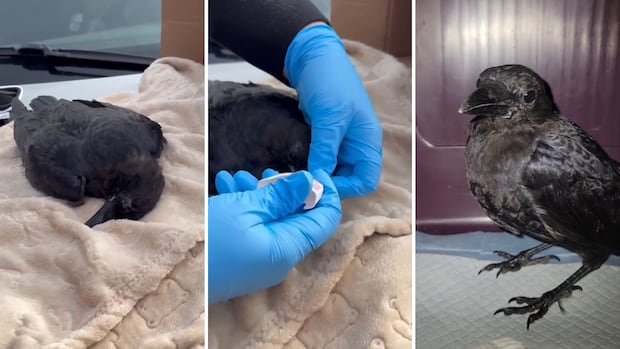

An organization dedicated to animal welfare in Prince George, B.C., has been providing nasal naloxone treatment to crows suspected of ingesting harmful substances found outside in the downtown area.
The Good Caws Crow Rescue Society (GCCRS) has shared videos of their volunteers administering nasal naloxone to unresponsive crows, with the birds later seen alert and able to fly after the treatment. Dayna Slater from GCCRS mentioned that the affected crows are concentrated in an area known for illicit drug activity.
Slater expressed concern over the increasing number of suspected drug overdoses among crows this year, with more than a dozen cases already recorded, a significant spike compared to previous years. She described the symptoms observed in the crows, including closed eyes, slowed heartbeat, and some exhibiting brown liquid foam from their beaks.
Although some crows did not survive, most were successfully released within 24 hours after receiving care. Dr. Kaitlyn Liukaitis from Birchwood Veterinary Clinic confirmed that the symptoms align with toxic drug overdose in animals, noting that naloxone has been effective in reversing these effects.
The rise in drug toxicity in British Columbia has led to public warnings in various cities, including Prince George, where overdose incidents have tripled, resulting in a constant sound of sirens downtown. Outreach groups are advocating for safe indoor spaces for drug use to prevent harm and reduce incidents like those affecting the crows.
Slater emphasized the collaborative efforts with harm reduction groups to identify and assist affected crows, with expired naloxone kits being provided for their use. She highlighted the need for covered garbage cans to prevent wildlife from accessing harmful substances inadvertently left in open disposal areas.
In conclusion, while the crows may unknowingly ingest toxic substances from garbage, the situation reflects broader environmental and societal challenges that need to be addressed for the well-being of both animals and humans sharing the urban landscape.