

For an extended period, Donald Trump frequently utilized age and mental acuity as key elements of his political strategy. He continuously ridiculed Joe Biden, employing a series of derogatory nicknames aimed at portraying Biden as aged, confused, and unfit for public office. Trump not only questioned his opponent’s endurance but transformed it into a regular public spectacle.
Now, with Trump resuming power at the age of 79, the focus has shifted from Biden to evaluating Trump’s own condition. Concerns regarding the president’s mental well-being are no longer limited to social media or partisan attacks but are being privately and sometimes publicly raised by diplomats, allies, and officials who have interacted with him firsthand.
Reports suggest that worries about Trump’s health are increasingly gaining attention across European capitals at various levels. This trend should raise significant concerns.
A notable warning allegedly came from Slovak Prime Minister Robert Fico, a political supporter of Trump who has often echoed his criticisms of Europe. Following a recent meeting with the US leader, Fico reportedly expressed concerns to fellow European leaders about Trump’s “psychological state.”
Observers present during the meeting described Fico as “shocked,” with one individual noting that Fico went as far as to describe Trump as “out of his mind,” while another mentioned that Fico appeared “traumatized” by the encounter. This sentiment was not unique.
During a White House meeting earlier this year with executives from the fossil fuel industry, a meeting intended to be serious and high-stakes, Trump’s attention drifted towards his ballroom construction project. He abruptly stood up, walked to a window, and exclaimed, “Wow! What a view.”
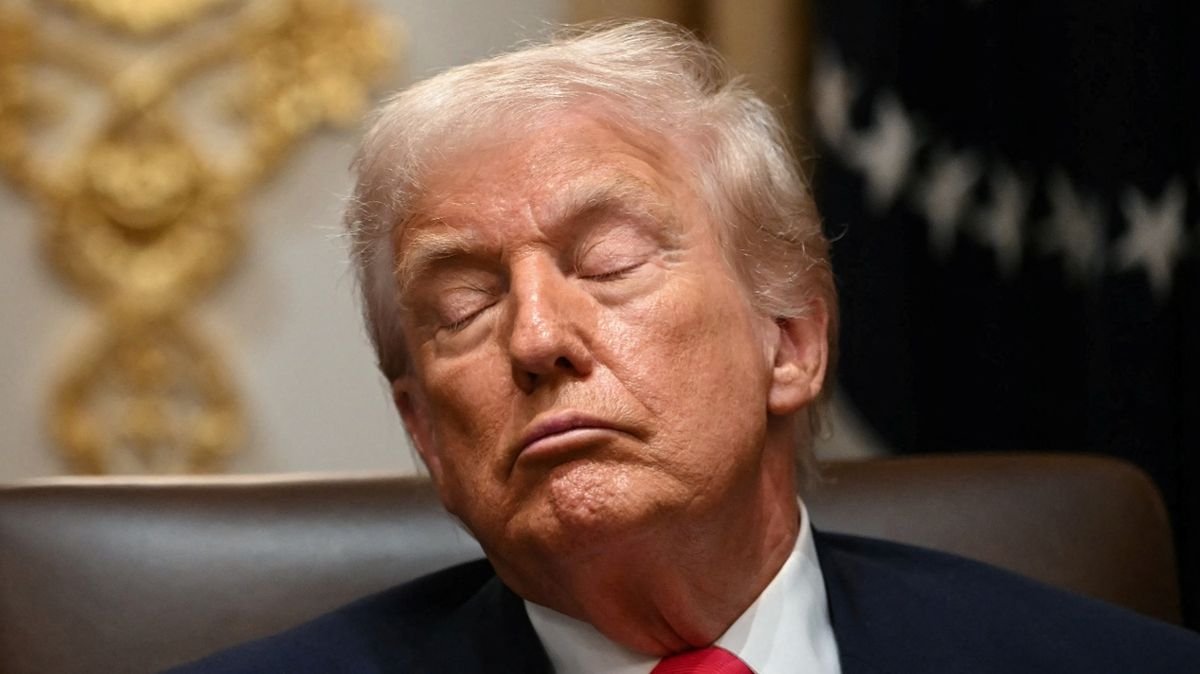
At that moment, Vice President JD Vance and Secretary of State Marco Rubio exchanged exhausted and resigned glances. This incident was not a theatrical performance at a rally but a demonstration of a president losing focus while governing. Additionally, there are reports indicating that Trump frequently falls asleep during crucial meetings, sometimes in the presence of world leaders.
While isolated incidents of fatigue are common, repetitive occurrences, coupled with escalating irritability, incoherent ramblings, and apparent memory lapses, collectively paint a concerning picture that cannot be easily dismissed as harmless idiosyncrasies.
Physically, there are also troubling signs. Trump’s ankles often display visible swelling, and his hands frequently exhibit bruising. The White House previously attributed the bruising to vigorous handshakes and long-term aspirin use, confirming a diagnosis of chronic venous insufficiency, a condition affecting blood flow commonly found in older individuals.
While these observations do not definitively indicate mental decline, when combined, they underscore a fundamental reality that Trump had previously emphasized about Biden: age and health are crucial considerations, especially when entrusted with nuclear codes and global stability.
The current situation is particularly poignant given Trump’s past behaviors. He showed no restraint in mocking Biden for verbal stumbles or signs of fatigue, exploiting every pause, slip, and display of weakness. He demanded cognitive assessments and encouraged public amusement.
However, as questions about his own conduct intensify, Trump reacts defensively and lashes out at those who raise concerns. There is a growing perception that Trump’s temperament has shifted, with allies characterizing him as more volatile, distracted, and prone to outbursts of anger.
His recent actions, from proposing outlandish ideas like acquiring Greenland to threatening to dismantle alliances, no longer appear as calculated provocations but rather impulsive reactions. When even friendly foreign leaders leave meetings unsettled, it is essential to question the underlying issues. This is not about scoring political points or amateur diagnoses; dementia is a serious condition that requires professional evaluation.
It is entirely reasonable and necessary to inquire whether the individual occupying the world’s most influential office is demonstrating signs of increasing mental and physical strain. Trump previously insisted that health and age were valid areas of scrutiny, asserting that the public had the right to know. By his own standards, that scrutiny must now be applied to him.
The true danger lies in silence and avoidance of uncomfortable truths. If world leaders are already privately discussing concerns about Trump’s stability, then transparency is crucial. America and the global community cannot afford to discover belatedly that the leader in charge was not as capable as portrayed.
While Trump once pointed and laughed at Biden, the laughter has ceased, leaving behind lingering questions.