
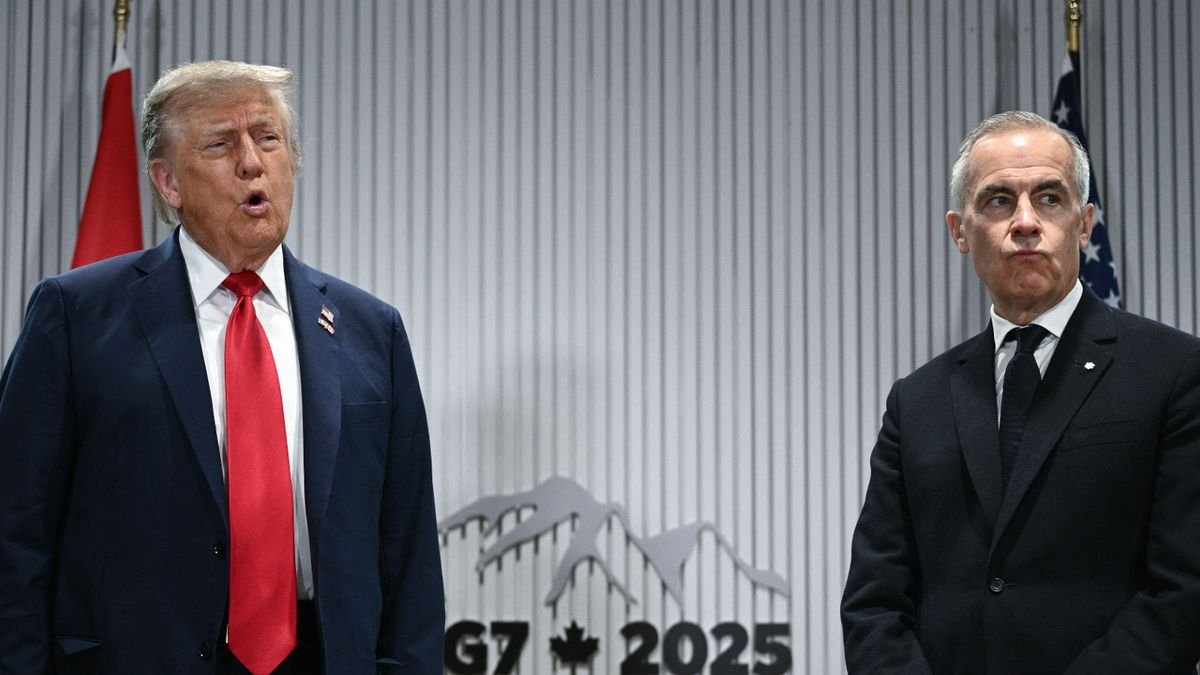

Canada’s Prime Minister issued a stark warning regarding his country’s security in light of threats from Donald Trump about potentially considering Canada as the 51st state of the U.S. Mark Carney, in a visit to Beijing, engaged with Chinese officials and business leaders to finalize a significant agreement aimed at reducing Canada’s dependence on the United States amidst global trade disruptions.
The security landscape is evolving, and Carney emphasized the importance of managing threats through alliances, noting the changing dynamics. While the U.S. remains Canada’s largest trading partner, recent developments indicate a shift towards strengthening ties with China, its second-largest economic partner. A pivotal trade deal was signed between Ottawa and Beijing, facilitating the influx of Chinese electric vehicles into Canada in exchange for reduced tariffs on agricultural goods.
Carney highlighted the economic pact as a strategic move to adapt to the evolving global order, signaling a departure from the traditional U.S.-Canada relationship that has faced strain under Trump’s administration. Trump’s imposition of tariffs on Canadian products and subsequent threats to escalate them, coupled with his rhetoric of integrating Canada as a U.S. state, have further strained bilateral relations.
The President’s recent comments on Greenland have added to the escalating tensions, with Trump expressing a desire to acquire the territory to counter potential influence from China and Russia. Denmark, the sovereign of Greenland, has firmly rejected any notion of selling the island, prompting a standoff between the U.S. and one of its allies.
Amid these geopolitical challenges, the intricate interplay between economic interests, security concerns, and diplomatic relations underscores the complex landscape facing Canada and its allies in navigating the shifting dynamics of global politics.