
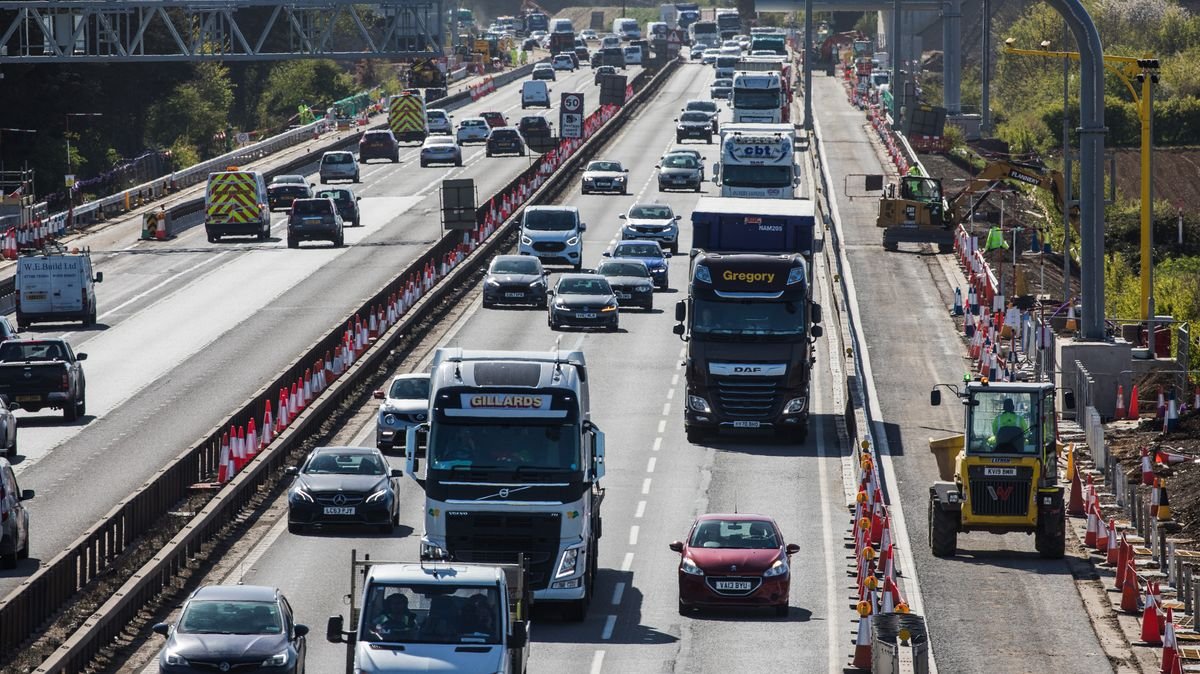

A recent study conducted by the AA has shown that the number of drivers feeling nervous or anxious while driving on modern “smart” motorways has doubled over the past year. These high-tech motorways, aimed at improving traffic flow by utilizing the hard shoulder as an additional lane, have faced criticism due to safety concerns. With a total of 396 miles of smart motorways in England as of April 2024, critics argue that they are fundamentally flawed, attributing at least 79 fatalities to accidents on these roads between 2010 and 2024.
Research indicates that motorists who experience breakdowns on smart motorways without a hard shoulder are approximately three times more likely to suffer fatal or severe injuries compared to those on traditional roads with a permanent hard shoulder. A survey involving 12,705 AA members revealed a significant increase in feelings of nervousness or anxiety among drivers on smart motorways lacking a hard shoulder, with the percentage rising from 23% to 46% in the past year. Similarly, motorways where the hard shoulder is only operational during peak traffic times witnessed a notable surge in anxiety levels, climbing from 30% to 47% within the same period.
In a move reflecting public concerns, the Conservative government announced in April 2023 the discontinuation of new smart motorway projects due to drivers’ lack of confidence and financial pressures. Edmund King, the President of AA, emphasized the importance of reinstating hard shoulders in controlled motorway setups to restore confidence among motorists. The AA stressed the necessity for improved transparency and consistency in assessing and monitoring motorway safety, particularly in light of the uncertainty surrounding safety evaluations on existing smart motorways.
While the Department for Transport maintains that smart motorways are among the safest road networks in terms of serious accidents or fatalities, critics like Mr. King urge the prompt release of safety performance reports to evaluate the success of the smart motorway initiative. The delay in publishing these reports raises concerns that potential drawbacks may outweigh the benefits. The Department for Transport spokesperson highlighted ongoing efforts to enhance smart motorways, including the addition of over 150 emergency areas for user safety assurance, as part of the broader Road Safety Strategy aimed at further improving road standards.