
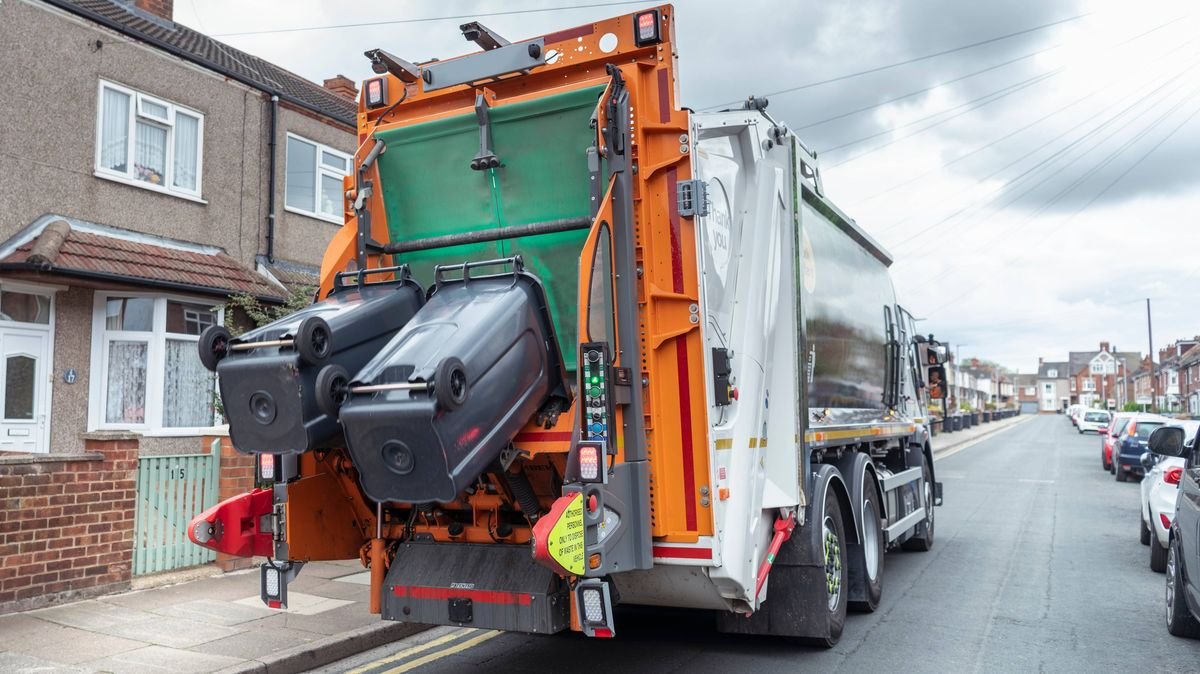

Some individuals may unknowingly violate a wheelie bin regulation, even if they are careful about the items they dispose of. According to a waste collector, wheelie bins might be left on the curb if they are too heavy to be lifted.
A TikTok influencer, Ashley (@Theno1.binman), highlights that some homeowners try to maximize the contents in their bins, assuming that as long as the lid closes, it will be collected. While this is generally true, exceeding the weight limit could lead to the entire bin being left behind, even if it is tightly packed.
In the United Kingdom, standard weight limits for domestic wheelie bins vary depending on the local council. Despite the physical capacity of the bin, collection teams have lifting restrictions in place for safety reasons.
Modern refuse trucks are equipped with onboard weight sensors that can detect bins surpassing the weight limit. If a bin exceeds this threshold, it is likely to be rejected, and collection crews may leave it at the roadside on collection day.
Typically, bin lorry lifting mechanisms have a safe working weight range of 30-50kg, varying based on the specific vehicle and council regulations. Just because the truck can lift the bin doesn’t guarantee that collectors can safely transport it to the lorry.
If the crew’s equipment sensors indicate excess weight or deem the bin unsafe, it may not be collected. Usually, a tag or sticker will be attached to the bin to notify the owner of the overweight issue, although this process may vary by council rules.
Ashley emphasizes the importance of not overloading bins to prevent accidents and strain on collectors. Proper waste management, such as recycling and utilizing other bins, can benefit both residents and collection crews.
Many councils offer larger or extra bins at no cost for households meeting specific criteria, such as larger families or medical needs. Eligibility requirements vary by location, and some councils may charge for additional or larger bins.
Residents should ensure they distribute waste between general waste and recycling bins, avoiding contamination of recyclable materials. Garden waste should be placed in the designated bin to prevent excessive weight.
Food waste, which holds significant moisture, can quickly add bulk to bins. Using a kitchen caddy or home composting bin for food waste can reduce the overall weight of general waste.
For heavy items like rubble, residents are encouraged to take them to a recycling center to avoid overburdening their bins. Furniture in good condition can be sold on platforms like Facebook Marketplace or Vinted instead of being discarded, or a bulky waste collection can be arranged with the local authority.
By following these practices, residents can ensure that their bins are within acceptable weight limits and facilitate a smoother waste collection process.