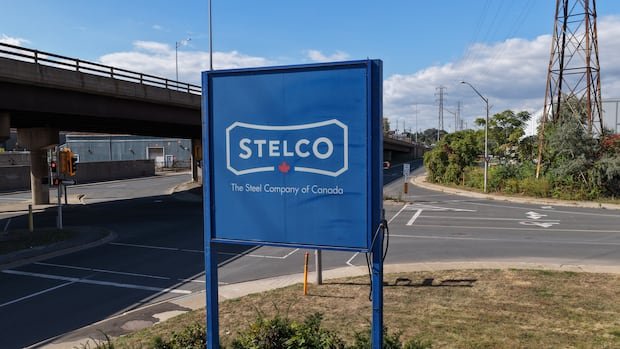

Cleveland-Cliffs, the parent company of Stelco in the U.S., has stated that they will defend themselves if faced with legal action by Ottawa following the announcement of the shutdown of a steel mill in Hamilton, leading to potential layoffs of up to 500 employees, partly due to the ongoing trade tensions between Canada and the United States. This statement comes in response to Prime Minister Mark Carney’s assertion that all available measures will be used against Cleveland-Cliffs as the government pursues legal actions against the Ohio-based corporation.
Lourenco Goncalves, the CEO of Cleveland-Cliffs, emphasized in an interview with CBC News that Stelco’s ability to freely sell steel produced in Hamilton to American buyers was a fundamental condition agreed upon during the company’s acquisition in 2024. This agreement included commitments to maintaining substantial employment levels in Canada as well as significant operations in Hamilton, all within the framework of the Canada-U.S.-Mexico Agreement (CUSMA) that was in effect at the time of the acquisition.
Goncalves noted that the ability to sell steel in the U.S. market was a critical factor for him in acquiring Stelco, emphasizing the importance of bilateral trade relationships between Canada and the United States. Despite the ongoing trade disputes, CUSMA remains valid until 2036, even though discussions on its renewal were halted by the U.S. in July.
Stelco attributed its decision to potentially lay off 500 workers directly to the trade tensions between the two countries, specifically citing the tariffs imposed by the Trump administration on foreign steel, which prompted retaliatory actions from Canada. Carney criticized Goncalves for supporting these tariffs, but Goncalves defended his stance, stating that his investments in Canada were not intended to harm Canadian workers.
Furthermore, Goncalves highlighted that the influx of foreign steel imports into Canada has created challenges for Stelco’s cold-rolled steel production, leading the company to focus on hot-rolled products. Responding to inquiries about turning down orders, Goncalves clarified that there were insufficient orders to decline, despite sources indicating potential demand for Stelco’s products.
While Carney proposed financial assistance to mitigate the trade war’s impact on companies like Stelco, Goncalves emphasized that the primary issue lies in the uncertain trade environment between Canada and the U.S., rather than financial constraints. He reiterated that the core challenge cannot be resolved solely through monetary support, emphasizing the need for stable trade relations between the two nations.