
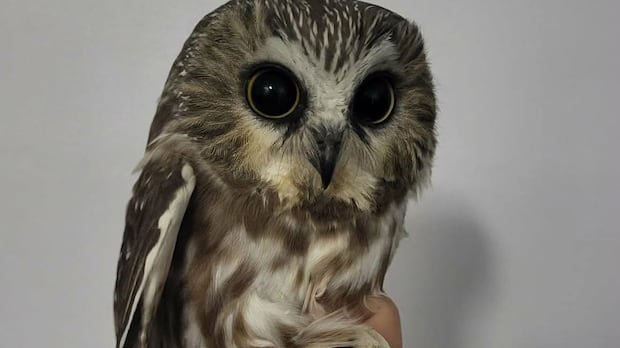

A significant number of migrating owls have caused a surge in activity at the Mugaha Marsh Banding Station in northern British Columbia. Jeannine Randall, a bird biologist with the Mackenzie Nature Observatory, located about 200 kilometers north of Prince George, expressed astonishment at the high owl numbers passing through the area this year.
The station usually captures around 100 owls during the season, but this year they have already caught 266, breaking previous records with two weeks still to go. The sudden increase in owl population led to a shortage of the necessary tracking bands required for monitoring these birds.
Randall explained that the station faced a scarcity of larger-sized bands mainly used for saw-whet owls, the primary species they focus on, as these bands were on backorder from the bird banding office. Despite reaching out to other organizations for assistance, they found that many stations across the region were grappling with similar band shortages due to the widespread influx of owls.
The rise in owl numbers is believed to be linked to the abundance of small rodents, particularly new hatchlings this year, which serve as the main prey for these owls. While the surge at the Mackenzie station is positive, Rémi Torrenta, a biologist at Birds Canada, highlighted that overall owl populations in the province have been declining over the past 25 years, including the northern saw-whet owls.
Torrenta mentioned that the current surge in owl numbers likely follows a well-documented four-year cycle, where high owl populations lead to a subsequent crash in the rodent population, forcing owls to migrate farther in search of food, known as a “mass eruption.” To monitor these trends, Birds Canada coordinates the Nocturnal Owl Survey, a citizen science program that relies on volunteers nationwide to track owl populations each spring.
The banding project at the Mackenzie Nature Observatory plays a crucial role in contributing valuable data to monitor owl populations and migration routes. Recently, the station recaptured an owl banded in Victoria in 2024, shedding light on the species’ travel patterns. Randall emphasized the importance of such research in making informed management decisions and understanding owl species better.