

Liberia has reached an agreement with the United States to welcome up to 1,200 deportees from third countries within the next year. The first batch of 20 individuals is scheduled to land in Liberia on Thursday, according to an official government announcement.
The Liberian government’s statement specified that the deportees will consist of individuals from African and Western Hemisphere nations who have been medically cleared for travel. Details regarding the specific nationalities of the deportees were not immediately provided, as the U.S. State Department does not typically disclose such information.
Traditionally, the U.S. has upheld the principle of non-refoulement, which prohibits the return of individuals to countries where their human rights or safety may be at risk due to factors like race, religion, or nationality. However, since assuming office in January 2025, the Trump administration has forged agreements with various African countries and others globally to deport individuals who cannot be sent back to their home countries legally. These agreements have faced criticism for the lack of notice given to deportees, despite being defended by Washington as lawful arrangements.
Legal experts have pointed out that third-country deportations are utilized by the Trump administration as a legal workaround. In many cases, migrants are deported to unfamiliar destinations, leaving them with limited options but to navigate their way back to their countries of origin.
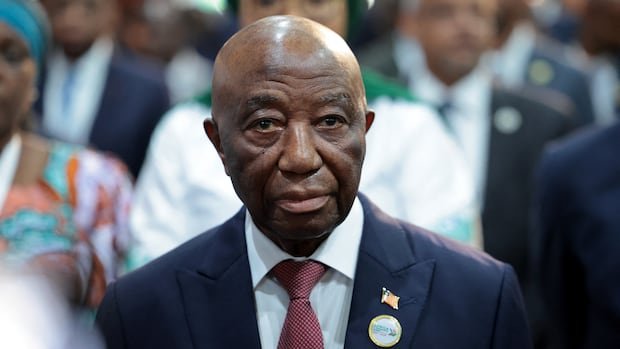
Last year, Liberian President Joseph Boakai was part of a delegation of West African leaders who met with President Trump at the White House. Reuters reported that during the meeting, Trump encouraged the leaders to accept third-country deportees.
Liberia clarified that the deportees will be treated as guests and will have the freedom to depart at their discretion. They will also have the opportunity to apply for asylum within Liberia. The government emphasized that the agreement with Washington was not contingent on any form of compensation, and Monrovia was not requesting any payment for hosting the deportees.
Senate Democrats previously characterized similar agreements as exploitative, highlighting that deals with countries like Equatorial Guinea, Rwanda, El Salvador, Eswatini, and Palau had collectively cost U.S. taxpayers $32 million. The senators criticized these arrangements, stating that deportation was being used as a bargaining tool through covert monetary transactions and concessions.
In addition to Liberia, other African nations that have accepted third-country deportees from the U.S. include the Democratic Republic of Congo, Central African Republic, Cameroon, Ghana, and Sierra Leone.
The U.S. administration’s strategy to reduce the foreign-born population includes encouraging unauthorized residents to self-deport and revoking a significant number of visas from foreign nationals. Recent judicial decisions have allowed the termination of legal protections for thousands of individuals from countries such as Ethiopia, South Sudan, Myanmar, and Somalia, with a focus on ending temporary protected status designations that have been in place since the 1990s.
Organizations like the U.S. Chamber of Commerce have opposed the termination of temporary protected status, arguing that it could negatively impact the economy and vital sectors like construction and healthcare that rely on immigrant workers. The U.S. Conference of Catholic Bishops has also condemned the demonization of migrants in the country, with support from Pope Leo, the pontiff born in Chicago.