
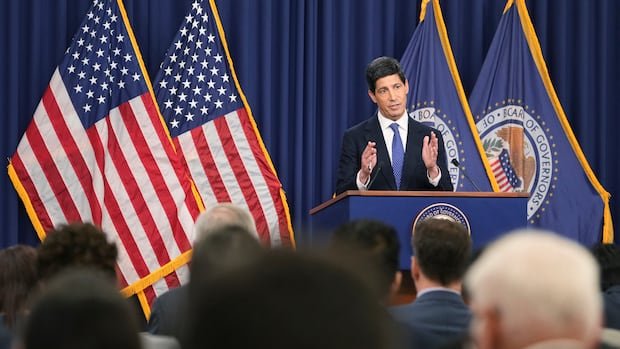

The U.S. Federal Reserve has implemented the first interest rate hike since 2023 to combat ongoing high inflation, indicating the possibility of another increase later this year. This quarter-point raise brings the Fed’s key rate to approximately 3.9 per cent, potentially leading to increased borrowing expenses for mortgages, auto loans, and credit cards in the U.S.
The decision comes at a time when Americans are grappling with elevated costs of essential items like groceries, fuel, and housing, with affordability becoming a central issue ahead of the upcoming midterm elections. In its latest projections, the Fed suggested that the rate-setting committee anticipates a second rate hike later in the year, targeting a rate of 4.1 per cent.
Fed Chair Kevin Warsh, appointed by President Donald Trump, highlighted the economy’s acceleration since the previous rate hold in late July, underscoring persistent inflation levels that surpass the Fed’s target of two per cent. Warsh emphasized the urgency to address the prolonged high inflation levels, stating, “The plain fact is that inflation is too high and has been for too long.”
The unanimous support from Federal Reserve policymakers for the rate hike aims to facilitate a swifter return to the two per cent inflation goal. Warsh also referenced the impact of escalating tensions between the U.S. and Iran, which have contributed to surging gas prices, influencing the Fed’s decision to endorse rate hikes.
Since assuming leadership at the central bank, Warsh has consistently emphasized the Fed’s commitment to curbing inflation, emphasizing data-driven decisions to gauge the inflation trajectory. This shift in approach marks a significant departure for Warsh, who previously entertained the idea of lowering the key rate, aligning with Trump’s stance on reducing borrowing costs.
The ongoing concerns stemming from the Iran conflict, which have driven gas prices up by over seven per cent in a month, pose a threat to broader inflation levels. Recent data indicates that core prices, excluding food and energy, saw a slight uptick in August, with inflation at 3.7 per cent in July compared to the previous year.
Despite consumer sentiment surveys reflecting prevailing economic pessimism, robust retail sales figures in August suggest sustained consumer spending levels, indicating that current interest rates may not be sufficiently restrictive to curb inflation. The Fed acknowledged the uncertainty posed by geopolitical events but noted the resilience in domestic spending, including substantial investments in AI data centers by major tech companies.
While Wall Street forecasts anticipate three total rate hikes, with additional increases expected in December and March, economists suggest that the rate hike in the U.S. may not prompt immediate similar actions in Canada. Rising inflation in Canada, driven by escalating energy prices due to the Iran conflict, remains a concern, with inflation hovering at three per cent in August, above the Bank of Canada’s two per cent target.
Comparatively, the U.S. faces a more severe inflation challenge, with core inflation measures indicating higher underlying inflation levels than in Canada. Canada’s weaker economic conditions, characterized by tariffs and elevated unemployment rates, alleviate the pressure for rate hikes in the country. Analysts predict that while both countries are experiencing inflationary pressures and rising bond yields, they are starting from different economic positions, with the U.S. expected to raise rates sooner than Canada.
For this reason, while the U.S. has proceeded with rate hikes, the Bank of Canada is not anticipated to follow suit until 2027, as per recent forecasts.