
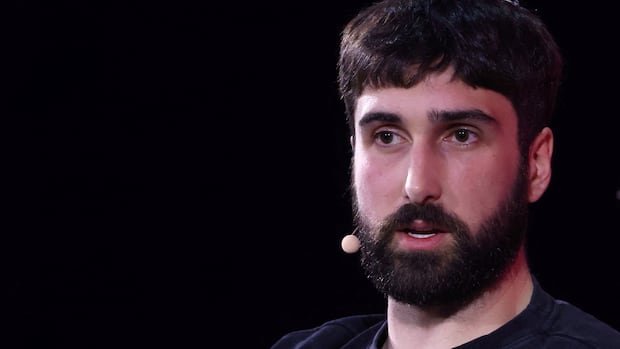

The CEO of a prominent Canadian artificial intelligence company is advising the public against succumbing to “fearmongering,” particularly in light of recent concerns raised by an Anthropic researcher suggesting a more than 10% chance of AI posing a threat to humanity within the next ten years.
Aidan Gomez from Cohere in Toronto emphasizes the importance of developing new AI safeguards while also acknowledging the potential benefits such as reducing living costs and advancing medical breakthroughs. He dismisses the alarmist extinction risk talk as unfounded, attributing it to sci-fi narratives and misconceptions.
Gomez supports Prime Minister Mark Carney’s proposal for a global non-industry entity to supervise and mitigate the perceived lower risks associated with AI. He highlights Canada’s significant role in the global AI landscape, attributing it to the nation’s early involvement in AI research and development.
Expressing confidence in Canada’s ability to lead in AI technology deployment, Gomez stresses the importance of maintaining control over the technology’s global dissemination. Cohere, the company he heads, specializes in generative AI models and has secured partnerships with the federal government and Bell Canada.
At an investment summit in Toronto, attended by numerous Canadian business leaders including Gomez, various projects were outlined aimed at attracting significant new investments to Canada, such as a major data center project in Alberta and expansions in Regina by Bell Canada.
Furthermore, financial institutions like TD Bank and Scotiabank pledged substantial financing for growth-oriented infrastructure projects, including AI initiatives. Carney emphasizes the need for speed and predictability in advancing Canada’s investment agenda, emphasizing that high standards do not equate to slow decision-making processes.
The push for rapid advancements in AI technology encounters resistance from some American AI research leaders advocating for a slowdown to establish safety measures. Gomez opposes industry-led oversight, advocating for a global technology stability body to ensure safe AI development without dominance by individual countries or companies.
Evan Solomon, the federal minister for AI and digital innovation, underscores the government’s focus on AI safety and impending announcements on safety guidelines in collaboration with Canadian AI pioneer Yoshua Bengio and Germany.
Jas Jaaj from Deloitte Canada acknowledges the challenges in establishing international safeguards for AI but remains optimistic, drawing parallels with past global cooperation in scientific and technological breakthroughs. He stresses the necessity for global agreements to mitigate risks associated with AI advancements.
The competitive rivalry between the U.S. and China in AI development is likened to past technological races, prompting calls for national sovereignty protections in foreign-owned projects on Canadian soil. Ensuring data sovereignty and strategic capacity protection are vital considerations as Canada seeks foreign investment for data centers.
The evolving AI landscape warrants careful consideration to balance innovation with safety and national interests, reflecting the complexities and opportunities associated with AI technology advancement.