
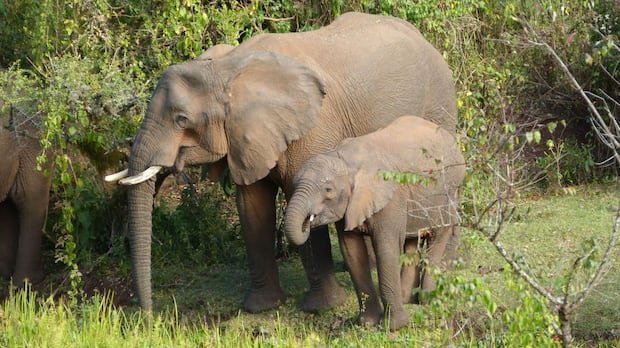


An ailing elephant is seen consuming the bark of a tree commonly utilized in traditional remedies. A maternal elephant incorporates a plant with acknowledged healing properties into her milk to nurture her offspring.
These narratives have been compiled by researchers from accounts shared by local wildlife monitors and community members regarding African elephants in Kenya’s Mount Elgon territory.
Elodie Freymann, an expert on self-medication in animal populations, commented to guest host Helen Mann on As It Happens, stating, “I’m no longer taken aback by these accounts.”
“Given the profound intelligence and complexity of elephants and their social structures, it was only a matter of time before we delved into the vast array of medicinal plants these elephants are utilizing in their natural habitat,” she expressed.
Freymann co-authored a recent study, published in the journal Nature on Thursday, which leveraged local insights to document numerous medicinal plants employed by elephants in Mount Elgon.
The researchers assert that this study contributes to the growing body of evidence highlighting the complexity and intellect of elephants, emphasizing the necessity to safeguard the biodiversity crucial to their survival.
Nevertheless, scientists emphasize the requirement for further investigation to conclusively ascertain whether the elephants are engaging in self-medication.
Leveraging indigenous knowledge
The findings stem from discussions with eight members of the Sabaot community, who have interacted with elephants for numerous years, including wildlife monitors, community guides, and village elders.
In certain instances, they depict scenarios where elephants exhibiting signs of weakness, lethargy, or digestive issues seek out specific plants known in local medicine. In other instances, they narrate how mother elephants offer known medicinal plants to their young.
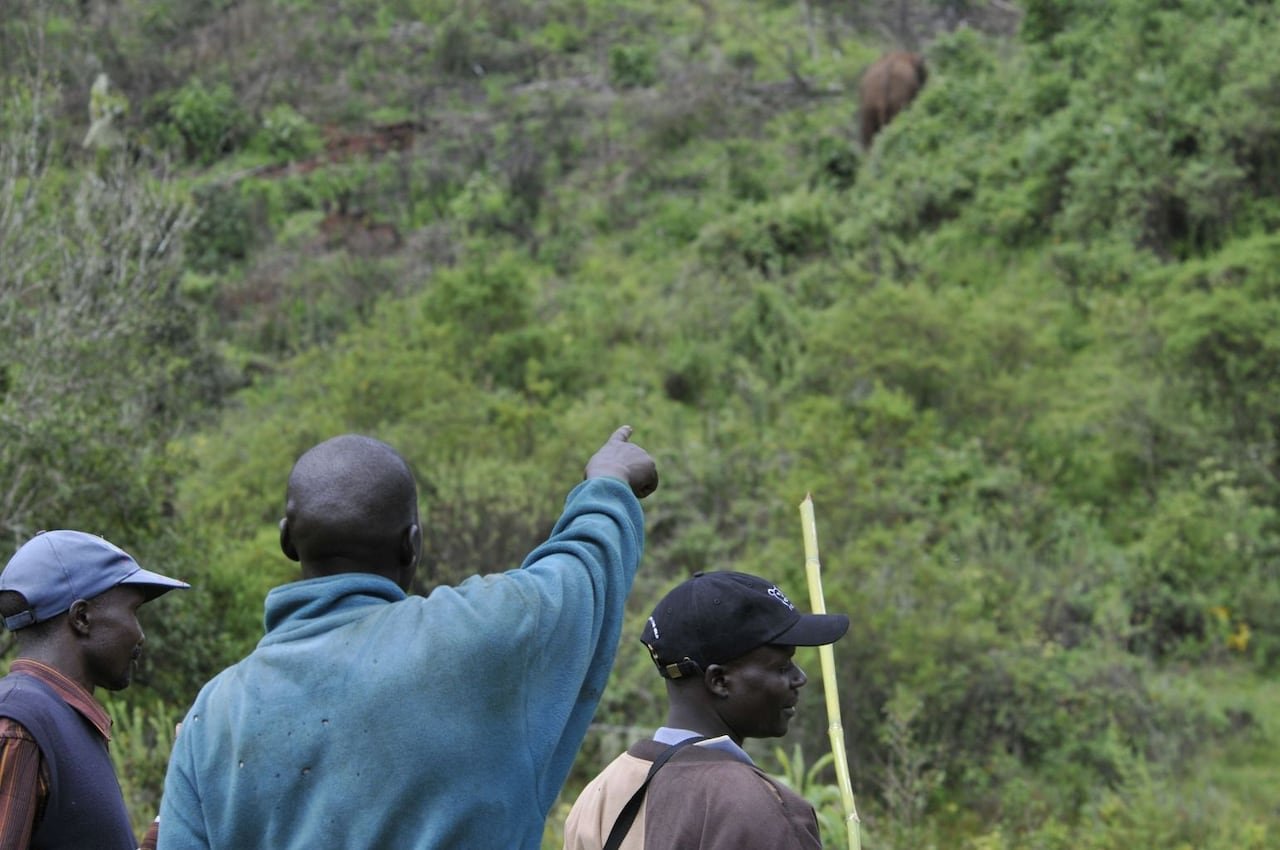
A Mount Elgon community member points out elephants in the distance. (Stephen Powles/Mount Elgon Foundation/Bernhard Nocht Institute for Tropical Medicine)
Among the 35 plants referenced in the discussions, 34 are commonly used in traditional local medicine. Eight of the nine most frequently mentioned plants have been scientifically documented to possess pharmacological properties.
<p class="paragraph-b3GxD