
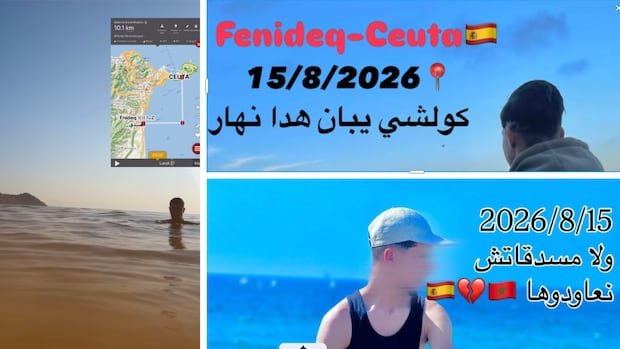

In the days leading up to the recent significant influx of migrants into Europe, a brief video shared on Instagram gained 1.4 million views. The video depicted a young man partially submerged in water with a map showing a sea route from Fnideq, Morocco, to Ceuta, a Spanish enclave in Africa. The post suggested that the arrival had been successful.
This video was just one of many viral posts on platforms like Instagram and TikTok that seemed to encourage and organize two waves of irregular migration from Morocco to Ceuta. The most recent attempt on August 15 resulted in multiple arrests.
These online accounts are part of a larger network focused on migration-related culture, using music, memes, and images to attract mostly African and Middle Eastern youth seeking better opportunities abroad. The posts, while tapping into the desperation of these individuals, have raised concerns about misinformation and potential exploitation for geopolitical purposes.
The surge in social media activity was triggered by misinformation suggesting that a Spanish court ruling allowed migrants to enter the country by sea. This led to over 72,000 people crossing the border on July 30, causing chaos in Ceuta and sparking a political crisis in Europe.
Many of these migrants have since returned to Morocco, but around 5,000 individuals remain in Ceuta, with some being supported by charitable organizations. The situation highlights how misinformation spread through online platforms can have real-world consequences, exploiting vulnerable populations seeking better opportunities.
Social media accounts were found directing followers to WhatsApp groups for planning crossings and offering advice on reaching Ceuta. Some accounts even provided detailed guidance on the best locations to cross the border. Reports also indicated that individuals were charged money for advice on entering Ceuta.
Following the events of July 30, Meta and TikTok agreed to fact-check posts to prevent criminal organizations from exploiting migrants through misinformation. However, a new wave of posts emerged ahead of August 15, promoting it as another opportunity to enter Spain. Moroccan and Spanish authorities were prepared this time, with thousands of police deployed to prevent further mass crossings.
The surge in online messaging was fueled by previous successful migrations to Ceuta, making it a popular entry point into Spain. While social media played a role in shaping perceptions, the desire to migrate was already present among many individuals, especially in regions with high youth unemployment rates and limited opportunities.
Accounts promoting migration to Europe often originate from North African countries like Morocco and Algeria, as well as Italy and Turkey. The messages convey a sense of disillusionment and aspiration for a better life, attracting audiences facing economic hardships and political challenges in their home countries.
These online accounts use aspirational language and imagery to glamorize migration, resonating with individuals seeking a way out of difficult circumstances. Despite efforts to fact-check and monitor social media activity, the allure of migration continues to drive individuals to seek new opportunities in Europe.