
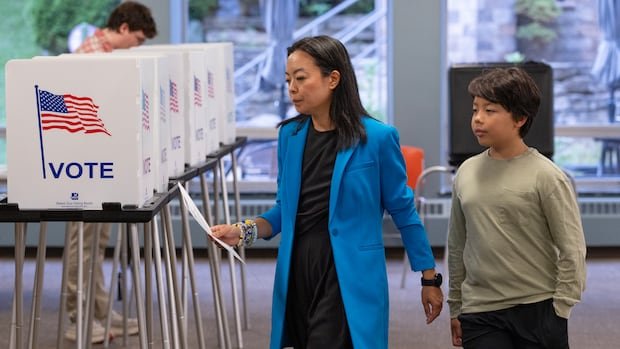

As the United States approaches the upcoming midterm elections, a challenging primary season has deepened divisions between the progressive and centrist factions within the Democratic Party. The outcome will impact control of Congress in November and potentially influence the 2028 presidential election.
Centrists advocate for moderate and practical policies to win over seats currently held by Republicans. Progressives argue that uninspiring establishment candidates will not mobilize a coalition of young people, working-class individuals, and diverse voters needed for victory.
Hans Noel, an associate professor of Government at Georgetown University, highlighted the difficulty in determining which faction has broader appeal. Progressive candidates may alienate some traditional Democratic voters but could attract new voters, including those who have not previously participated in elections.
The primary elections, where Democratic candidates are selected for the general elections against Republicans, have seen victories and losses for both sides. In Wisconsin, moderate David Crowley won the governor’s primary over progressive Francesca Hong, who faced backlash for past controversial statements. Meanwhile, moderates successfully defended their positions in Washington and Missouri.
In Michigan, progressive Abdul El-Sayed, campaigning on progressive policies like Medicare for all and wealth taxation, secured a victory despite facing significant financial opposition. The progressive wave also swept through New York and Colorado, illustrating a shift within the party.
There has been discontent among young voters towards the Democratic Party’s leadership, with calls for a more aggressive stance. Critics argue that the party lacks a clear identity and is not confrontational enough.
While progressives reassess their positions to appeal to a broader audience, moderate Democrats warn of potential risks in swing states. Data analysis suggests that while progressives may have passion, moderates still hold significant sway in general elections.
The ongoing debate within the Democratic Party reflects broader ideological differences and strategic considerations. The outcome of this internal struggle will shape the party’s future direction and electoral success.