
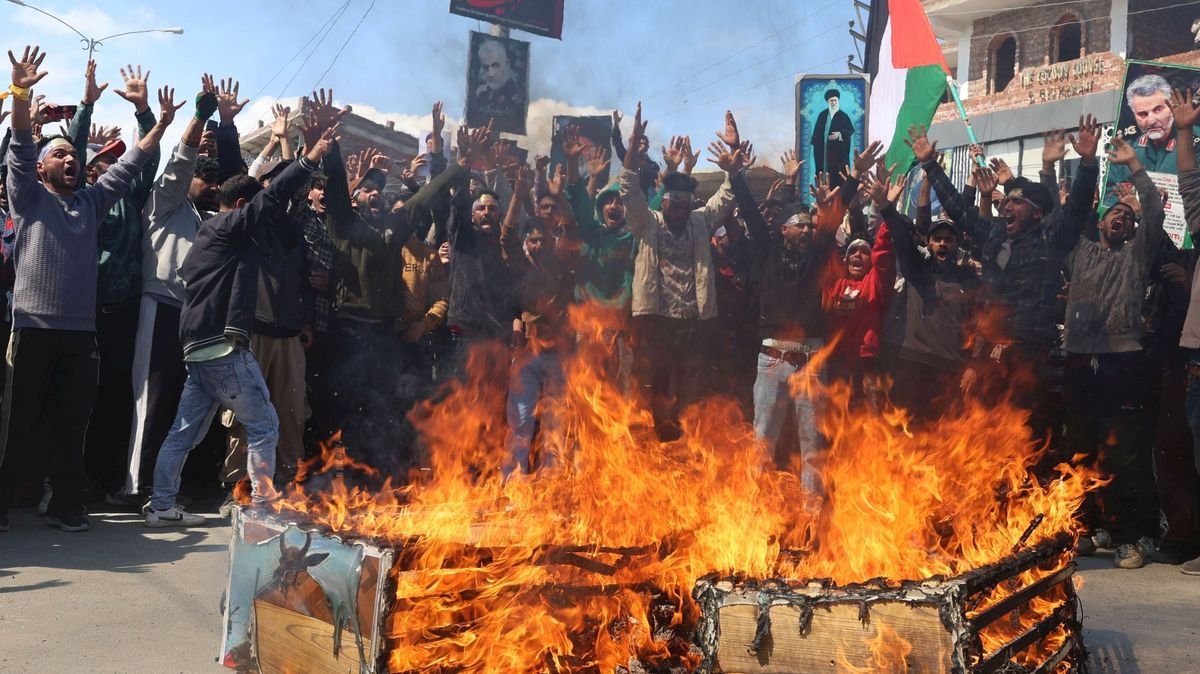

Up to 3.2 million individuals in Iran have been displaced temporarily due to severe US-Israeli strikes, as confirmed by the United Nations. The escalation of violence by Tehran suggests a prolonged conflict may be unfolding, with a growing number of coalition military casualties.
Despite Donald Trump’s claims of victory and the destruction of the Iranian regime by US-Israeli forces, civilian casualties are on the rise, reaching approximately 1,300 deaths and 17,000 injuries in the region. Additional casualties include four US troops in a plane crash in western Iraq and a French soldier in drone attacks on an Iraqi base.
As casualties increase, public sentiment in America towards the war is turning more negative. The UK is facing a delicate situation as it defensively responds to Iran’s aggressive actions, aiming to avoid further entanglement in the conflict with US allies.
Reports suggest that Russia is providing intelligence to Iran to enhance their effectiveness in tactics, including drone and missile operations. Coalition troops have noted the drones flying at low altitudes, evading detection, a strategy potentially learned from Russian experiences in Ukraine.
President Trump anticipates a swift conclusion to the war, but Iran’s resilience and the significant costs incurred by the US and Israel indicate a prolonged conflict. The lack of regime change and ongoing damage suggest Iran seeks to endure while inflicting significant harm on its adversaries.
Amidst Trump’s erratic declarations regarding the war, the true objectives beyond showcasing US military power remain unclear, as regime change appears unattainable. The cycle of leadership replacements is likely to persist, prolonging the conflict and uncertainty about its resolution.