
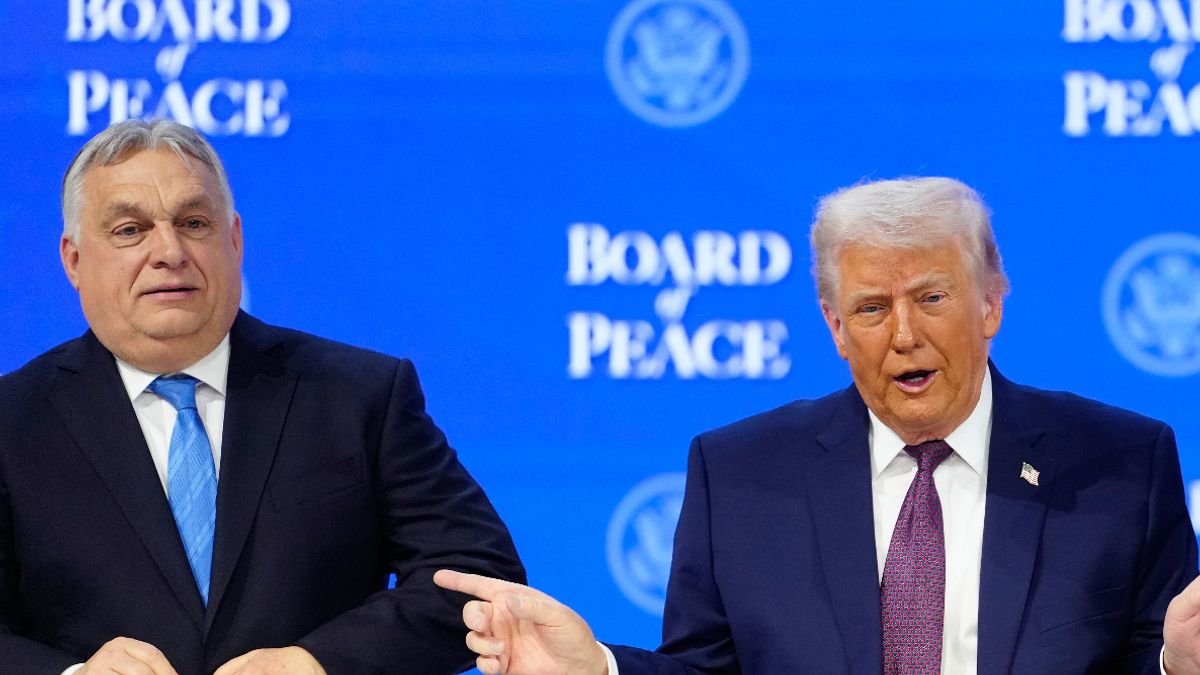

Donald Trump has formally established himself as the head of the Board of Peace, a new organization aimed at competing with the United Nations. Despite the UK’s decision not to participate, it is reported that former UK Prime Minister Tony Blair is part of the executive team.
Originally intended to promote peace in the Middle East, concerns are rising that Trump is creating an authoritarian alternative to the UN. A proposed constitution for the group designates Trump as the lifelong chairman, granting him full control over the $1 billion entry fee required from permanent members.
Several nations that have joined the board are governed by right-wing authoritarian leaders, including Argentina, Bahrain, Egypt, Hungary, Pakistan, Turkey, and Saudi Arabia. However, notable European allies such as France, Italy, Sweden, and the UK have opted out of participation.
UK Foreign Secretary Yvette Cooper expressed reservations about Russia’s involvement in the board, citing concerns about President Putin’s commitment to peace in Ukraine. Noting broader implications, Cooper emphasized the need for a focus on critical issues.
Out of the 20 countries reported to have signed up, only Argentina and Israel are classified as “free” according to the Freedom House’s 2025 report. The majority of the remaining nations are categorized as either ‘not free’ or ‘partly free’, indicating varying degrees of political and civil liberties restrictions.
The executive committee of the board includes US Secretary of State Marco Rubio, Witkoff, Kushner, Blair, Apollo Global Management CEO Marc Rowan, World Bank President Ajay Banga, and Trump’s deputy national security adviser Robert Gabriel.
At the launch event held during the World Economic Forum in Davos, Trump expressed optimism about the board’s potential impact beyond addressing the Israel-Hamas conflict. While pledging cooperation with the UN, Trump highlighted the uniqueness of combining efforts between the Board of Peace and the United Nations.
In his opening statements, Trump acknowledged the collaborative efforts of “many nations” in establishing the board and emphasized future partnerships, including with the United Nations.