

President Donald Trump may face opposition from his military officials if he pursues the annexation of Greenland, a move that could violate a 75-year-old statute. Trump’s recent actions towards Venezuelan President Nicolas Maduro have escalated tensions with Greenland, a territory under Denmark and a NATO ally.
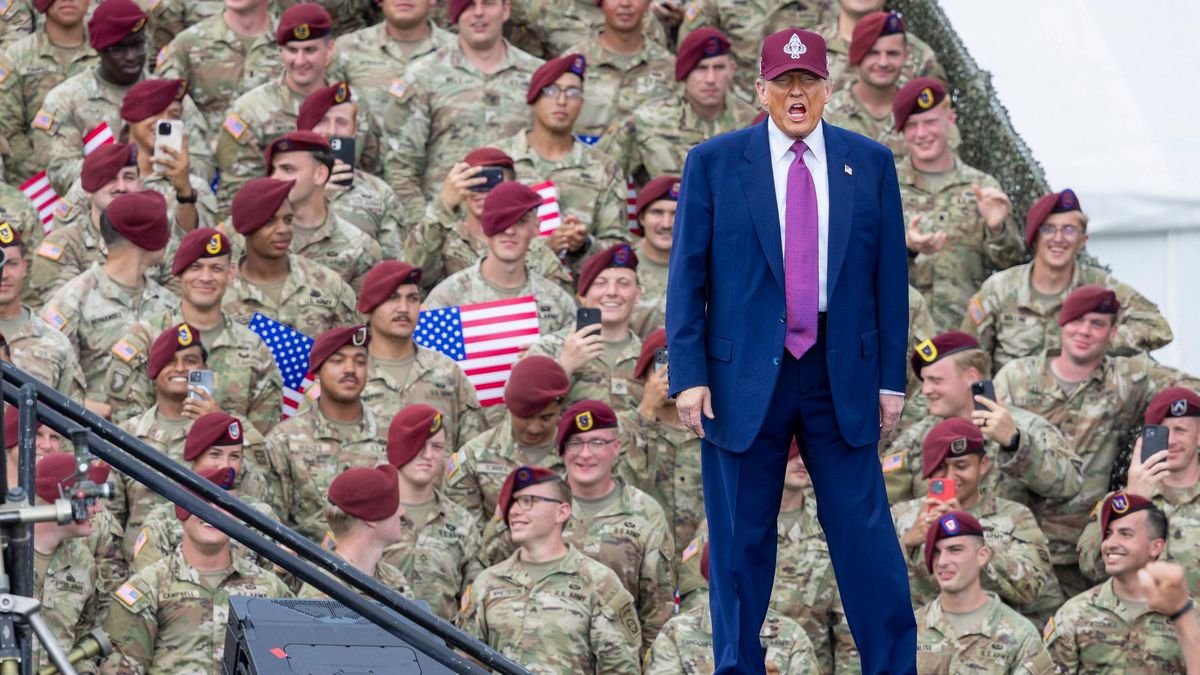
A law dating back to 1951, part of the Uniform Code of Military Justice, empowers soldiers to reject unlawful commands, potentially leading to resignations among Trump’s top military brass if ordered to seize Greenland. Additionally, each US soldier is entitled to a moral conscience under the First Amendment, complicating what some perceive as Trump’s territorial ambitions in the Arctic.
This revelation coincides with Trump’s upcoming appearance at the World Economic Forum in Davos, Switzerland, where he is expected to address the situation as US aircraft move towards Greenland. Speculation abounds regarding Trump’s plans for Greenland, including potential military conquest or imposing sanctions on dissenting nations.
Recent tariffs imposed by the US on countries opposing Trump’s policies, such as the UK, Denmark, Norway, Sweden, France, Germany, the Netherlands, and Finland, are set to begin at 10% on all imports, escalating to 25% in June if Greenland is not acquired by the US.
In response to queries about his intentions, Trump affirmed his commitment to the sanctions, suggesting that Europe should focus on matters concerning Russia and Ukraine rather than Greenland. Despite growing unrest in Greenland, with local political parties expressing opposition to US incorporation, Trump remains determined, stating, “You’ll find out,” before departing for Davos.
The Greenlandic representatives emphasized their desire to maintain their independence, asserting their right to determine the territory’s future without external interference. Trump’s dismissive response to these sentiments highlights the ongoing uncertainty surrounding the situation.