
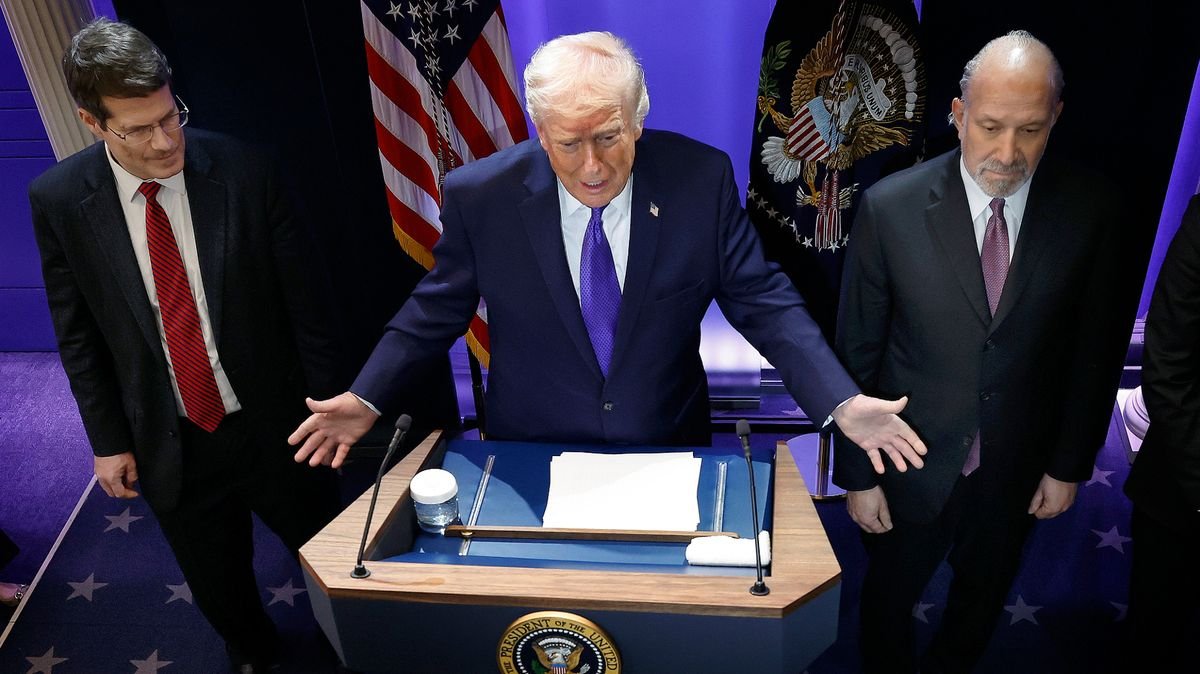

Donald Trump was given an opportunity by the Supreme Court, which he swiftly disregarded during a lengthy and irritable television outburst. The Supreme Court’s ruling against his tariffs could have been a positive turn for his presidency, providing a chance to abandon a policy widely disliked by Americans. However, instead of accepting the decision, Trump is exploring various loopholes to maintain the tariffs, consequently keeping retail prices high. This move seems contradictory to his administration’s focus on addressing the cost of living and affordability, which could be perceived as a risky strategy. By persisting with the tariffs, Trump is giving struggling American households a convenient scapegoat for the increased prices of everyday goods.
During his 45-minute tirade, Trump expressed deep disappointment with the ruling and criticized certain Supreme Court members, whom he deemed lacking in courage for not siding with him. While praising the justices who supported him, he accused the dissenting judges of being politically correct, a claim that appeared unfounded. Trump’s remarks included personal attacks on Justices Gorsuch and Barrett, even questioning their family honor. Throughout the press conference, Trump boasted about his reading abilities and comprehension skills, emphasizing his confidence in the legal language favoring his stance.
Trump recounted an encounter with a steel plant owner who allegedly expressed a desire to kiss him out of gratitude for the tariffs benefiting his business. Trump highlighted his restrained approach to imposing tariffs on various countries, indicating his intention to comply with legal procedures. Despite the setback from the Supreme Court, Trump emphasized the availability of alternative methods to impose tariffs under different statutes, asserting that this decision enhances his authority to regulate trade effectively.
In an attempt to shift the narrative, Trump accused the court of being influenced by foreign interests and a small political movement. He suggested that the ruling actually strengthens the President’s trade regulation powers, despite the restrictions imposed. Trump’s remarks indicated a willingness to escalate trade actions under different legal frameworks, aiming to maximize revenue and protect domestic industries.
While Trump lamented the limitations imposed by the Supreme Court, he highlighted his ability to disrupt trade with other countries without charging taxes. He emphasized his unrestricted authority under the emergency law but criticized the inability to levy fees. Trump’s statements conveyed a sense of frustration over the constraints imposed by the court’s decision, portraying himself as capable of drastic trade measures without financial repercussions.
Overall, Trump’s reaction to the Supreme Court’s ruling reflects his determination to maintain his tariff policy despite legal challenges, emphasizing his commitment to protecting American industries and asserting his executive authority in trade matters.