
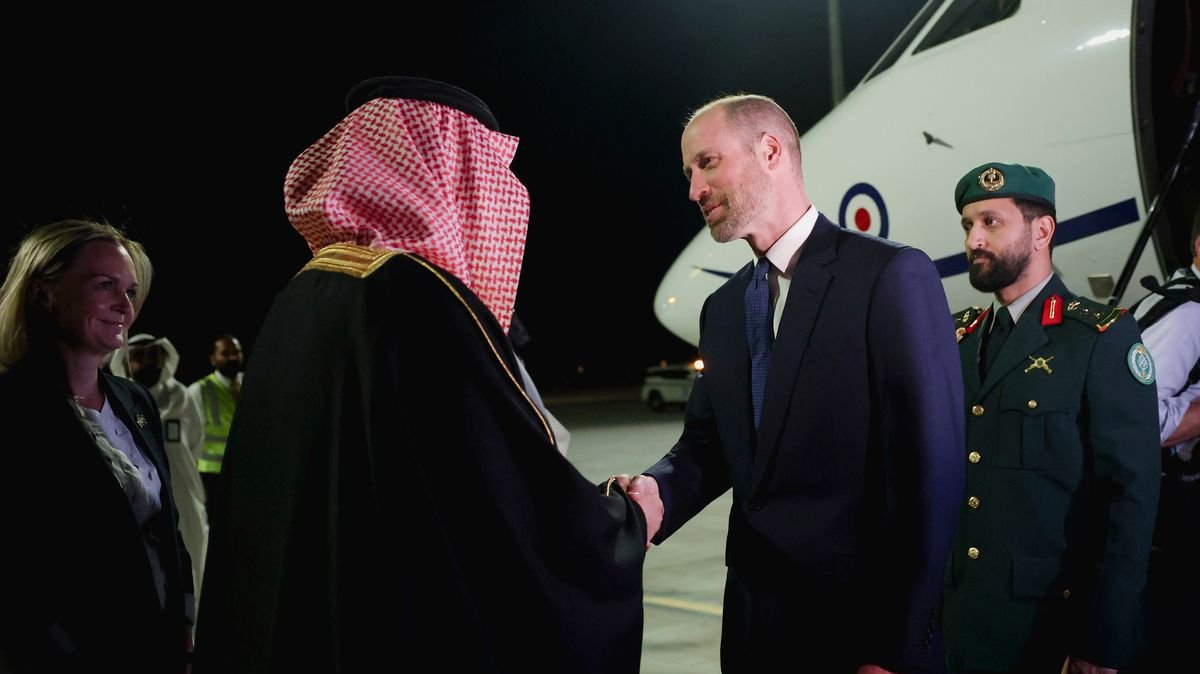

The Prince of Wales is currently in Saudi Arabia, aiming to move past the Epstein scandal. During a recent encounter with a reporter, he avoided a question about his controversial uncle. However, the Royal family is not the only target of Epstein’s connections. Epstein had ties with various monarchies in Europe and the Middle East, as revealed in recently released files.
A report by The New York Times titled ‘A Look Inside Jeffrey Epstein’s Lair’ unveiled a framed photograph of Saudi Crown Prince Mohammed bin Salman, also known as MBS, in Epstein’s New York mansion. In one email from 2016, Epstein mentioned receiving a gift of a tent from MBS, adding to the scrutiny Prince William faces during his visit to Saudi Arabia.
Upon arriving at King Khalid International Airport on Monday, the Prince of Wales traveled without his wife, Kate Middleton, who stayed back in the UK with their children. This decision may have been influenced by past controversies, such as the Riyadh Comedy Festival, where entertainers were criticized for supporting Saudi Arabia’s repressive policies.
During his visit, Prince Charles engaged with young female footballers in Riyadh, showcasing the progress of women’s rights under MBS’s reforms. Saudi Arabia has made advancements in areas like sports event attendance, physical education for girls, job opportunities for women, and driving rights. However, the country still ranks low in gender equality according to the World Economic Forum.
Despite reforms like changes in the guardianship system, women in Saudi Arabia face restrictions on marriage, divorce, and personal freedoms. LGBTQ+ rights are virtually non-existent, with severe penalties for those found guilty of homosexuality. The country’s efforts to host global events and promote a modern image are met with criticism from human rights advocates.
The visit to Saudi Arabia has sparked discussions about ‘Royal-washing’ and the role of diplomacy in portraying a positive image of the monarchy. Questions arise about using royal figures to enhance the country’s image and whether such engagements truly promote progressive values.