

As darkness fell and a solar eclipse dimmed the skies over northern France recently, a group of individuals gathered at a bus stop along a highway. Many of them were equipped with vivid orange life jackets. These individuals, including women and young children, had been residing in nearby forests for several months, waiting for a favorable moment to embark on a boat journey across the English Channel. They expressed the challenges they faced, mentioning encounters with law enforcement preventing their crossings and even resorting to tear gas in some instances.
For years, the coastal area between Dunkirk and Calais, spanning 40 kilometers, has served as a transit point for migrants navigating through Europe. The flow of migrants fluctuates due to various factors such as conflicts, migration routes, weather conditions, and European policies. Despite an overall decrease in crossings, the boats ferrying migrants have been accommodating larger numbers and opting for longer and riskier routes across the Channel. These developments have unfolded amidst ongoing debates on European migration, triggered by a surge of migrants storming the Spain-Morocco border in Ceuta in late July.
British politicians swiftly directed their attention towards the influx of migrants attempting to cross the Channel. Nigel Farage, leader of the anti-immigration Reform UK party, advocated for the Royal Navy to return migrants to France. However, former Navy officials disputed the feasibility of such a proposal.
In August, British Prime Minister Andy Burnham visited Dover, a prominent landing point for asylum seekers in the UK. He pledged to take relentless actions to reduce boat arrivals while emphasizing the necessity for safer migration routes to combat human trafficking networks.
The decrease in crossings has led to heightened risks for migrants attempting to cross the English Channel. The UK government had bolstered funding for French law enforcement operations to prevent illegal crossings, resulting in a fortified border regime in Calais. The situation has transformed the region into a border zone, with authorities cracking down on departure attempts and dismantling makeshift settlements where migrants await opportunities to cross.
By the end of July, approximately 14,200 asylum seekers had crossed the Channel, a decrease compared to the same period in the previous year. Volunteer organizations and NGOs, like Calais Appeal, continue to provide support to migrants in the region, emphasizing that deterrence measures do not dissuade individuals from embarking on perilous journeys.
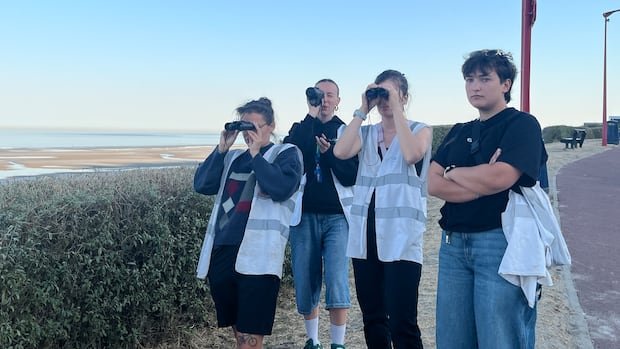
The narrative is shared by Mohammed, a migrant seeking refuge in the UK after enduring arduous journeys through multiple countries. Mohammed’s pursuit of safety and reunification with his family in London underscores the challenging circumstances that drive migrants towards uncertain paths. Amidst the polarizing discourse on migration in the UK, individuals like Angèle Vettorello and Salomé Brun strive to assist migrants and raise awareness about the risks involved in their journeys.
In the coastal community of Ambleteuse, Mayor Stéphane Pinto reflects on the escalating dangers of Channel crossings and the tragic consequences that result from failed attempts. The mayor, who has witnessed firsthand the harrowing impact of migration, calls for a collective international effort to address the root causes of migration and provide sustainable solutions for those seeking safety and refuge.
The migration issue, as exemplified by the challenges faced by migrants crossing the English Channel, underscores the need for comprehensive and collaborative responses at a global level to address the complexities of migration flows and ensure the safety and well-being of those embarking on perilous journeys.